Your Records Aren't a Filing Problem. They're a Trust Problem.

Nobody lies awake worrying about filing. They lie awake over the question they can't answer: Who approved this? Where's the signed version? Can we show the money went where we said? Records feel like an administrative chore right up until the moment someone asks you to prove something — and then they stop being admin and become the entire game.
Everyone is really asking the same thing
The auditor, the board, the funder, the public, the lawyer, your own teammate three years from now — they all arrive with different titles and the same underlying question: can you prove it? Can you prove the decision was sound, the money was spent as promised, the process was fair, the work was done? Strip away the formality and that single question is what every relationship runs on.
Trust compounds — or it taxes you
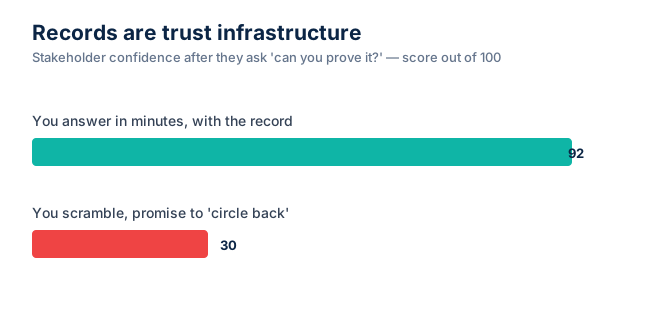
When you can answer instantly, something quietly powerful happens: people stop checking. The auditor moves faster, the board asks fewer follow-ups, the funder renews without a fight, the public stops assuming the worst. Proof, delivered easily, buys you the benefit of the doubt on everything you haven't been asked about yet. That's trust compounding.
When you can't, every interaction levies a tax. Each unanswered question invites three more. 'Let me get back to you' is heard as 'they don't know,' and not-knowing is heard as something worse. The filing was never the point. The filing is just the mechanism. Trust is the product — and a missing record quietly withdraws from an account you can't easily refill.
Fund it like the infrastructure it is
This is why 'we'll clean up the records later' is such a dangerous sentence. You're not deferring an admin task; you're running your most important relationships on credit. Treat records the way you'd treat any infrastructure that trust depends on — like the bridge, not the paperwork about the bridge. Because the day someone asks you to prove it, your records won't feel like filing at all. They'll feel like the only thing that ever mattered.
This idea anchors everything we write. Keep going with the Records Test series.