The Version-Control Habits of People Who Never Lose a Document

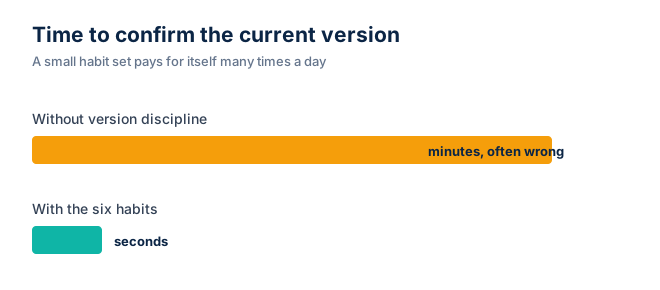
You know the person who, when someone asks 'is this the latest?', answers in five seconds and is always right. It looks like a gift. It isn't. It's a handful of small, boring habits that quietly guarantee one copy is always the truth — and they're easy to steal.
What follows isn't a software pitch. Every one of these works with a shared drive, a notebook, or whatever you already use — because the discipline lives in the behaviour, not the tool. The people who never lose a document simply do these without thinking, and once you set them up, so will you. Here are the six.
1. One home per document
The current version lives in exactly one place, and everyone knows where. Not 'the drive, or my email, or the project chat' — one home. The moment a document has two equally-official locations, you've created the exact conditions for confusion. People who never lose a document never have to ask which copy is real, because there is only one place a real copy can be.
2. The filename carries the truth
A consistent naming pattern — project, document, date or version, in that order — means the current file announces itself. No 'final', no 'final_v2', no 'final_FINAL_use-this'. A name a stranger could sort correctly in five years is a name you can trust today.
3. Supersede, don't accumulate
When a new version arrives, the old one moves out of the working folder immediately — to an archive, not the trash. The working space only ever holds what's current. This single habit removes the most common cause of error: an outdated file sitting right next to the live one, looking identical.
4. Change is announced, not discovered
When the current version changes, the people who rely on it are told — briefly, in the same channel every time. Most version disasters aren't caused by a wrong file; they're caused by someone working hard on the right file from last week, never told it moved.
5. One author at a time, or true co-editing
Either one person holds the pen and hands it off cleanly, or everyone edits the same live copy together. The fatal middle ground is several people editing private copies and emailing them back — that's not collaboration, it's a merge conflict waiting to become a mistake.
6. The record outlives the person
Finally, none of this lives only in one head. The home, the naming, the archive are set up so that if the organized person wins the lottery tomorrow, the next person inherits a system, not a mystery. That's the difference between a tidy individual and a resilient team.
None of these six is clever. That's the point. Version control isn't a tool you buy or a talent you're born with — it's the steady habit of making sure, at every step, that there is one obvious truth and everyone can find it. Start with habit one this week and the rest follow.
More field-tested practices like these in our Field Guide series.