Why Transparency Is Cheaper Than Secrecy

Transparency is usually filed under 'cost' — the extra disclosure, the open meeting, the report nobody enjoys writing. Secrecy, by contrast, feels free and safe: hold the information close, reveal it only when forced. Run the actual numbers, though, and the ledger flips. Openness is the cheaper option. Secrecy is the one with the hidden, compounding bill.
Openness is a fixed, small cost
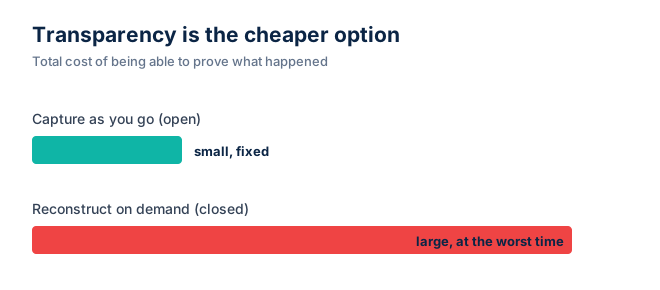
Being transparent mostly means capturing the truth as it happens: recording the decision when it's made, filing the document where anyone can find it, writing the short report while the facts are fresh. Each act is cheap, predictable, and done once. Spread across a project, it's a steady, modest tax you barely feel — and it leaves you with a record that answers questions before they're asked.
Secrecy is a variable cost that arrives at the worst time
Holding information close looks free right up until someone demands it — an auditor, a board, a court, a journalist, a community. Now you're reconstructing the truth under pressure, on someone else's deadline: assembling scattered records, interviewing people about decisions nobody documented, explaining gaps you can't fill. The cost didn't disappear when you chose not to capture as you went. It moved into the future and grew teeth.
And it rarely arrives alone or on a convenient afternoon. The demand for proof tends to come bundled with something already going wrong — a dispute, a complaint, a missed number, a change in leadership — so you reconstruct the record at exactly the moment your attention is needed elsewhere and your credibility is already in question. Worse, the reconstruction is never as good as the original would have been. Memories conflict, key people have moved on, and the gaps you fill with 'as best we can recall' are precisely the ones a skeptic will press on. You don't just pay more for the truth later; you get a weaker version of it. Capturing it the first time, while it was free and certain, would have produced a stronger record for a fraction of the effort.
The compounding part
There's a second cost to secrecy that never shows on an invoice: trust. When you can't readily show your work, people assume the worst, and assumed-worst is expensive — more oversight, more questions, slower approvals, thinner benefit of the doubt on everything you haven't been asked about yet. Openness buys the opposite. A track record of easy answers means people stop checking, and 'they can always show it' becomes its own quiet form of capital.
None of this requires broadcasting everything to everyone. Transparency isn't exposure; it's the ability to show the truth to the right person, quickly, when it's appropriate. That ability is built the cheap way — a little capture, continuously — or paid for the expensive way, in a scramble, later. The organizations that look impressively open usually aren't braver than the rest. They just did the cheap thing first.
This idea runs through everything we publish. Keep going with the Records Test series.