One Chart: How Fast "We'll Sort It Later" Becomes Unsortable
'We'll sort it out later' is the most reasonable-sounding sentence on any project. The deadline is now; the filing can wait. The problem isn't the logic — it's the speed. A project that's perfectly findable today becomes an archaeological dig much faster than anyone expects, and the slope is steeper at the start than at the end.
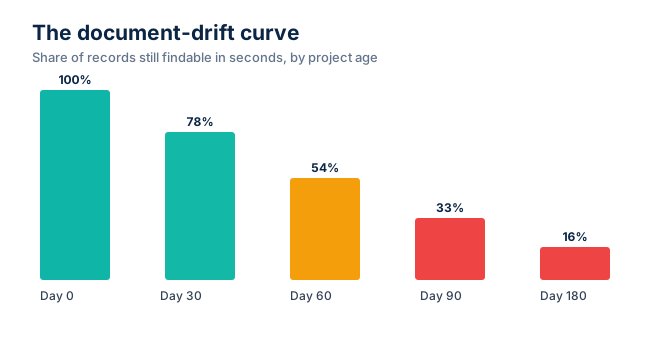
Here's roughly how the share of records you can still locate in seconds decays once the 'later' habit sets in:
The damage is front-loaded
Notice where the curve drops hardest: the first month or two. That's because the context that makes a document findable — who sent it, what it answered, why it mattered — is freshest right when you're least willing to spend thirty seconds capturing it. By the time you circle back, the file is still there, but the memory that gave it meaning is gone. You don't lose the document; you lose the thread that leads to it.
It's worth being precise about what the curve measures. Not whether a file still exists — storage is cheap and almost nothing truly disappears. It measures whether you can put your hand on the right version, understand what it is, and trust that it's current, all in seconds. A document you can technically locate after twenty minutes of opening near-identical files is, for practical purposes, lost. Findability is the real asset, and findability is what decays. That distinction matters, because most people defend 'we'll sort it later' by pointing out that nothing was deleted — true, and beside the point.
Why 'later' never comes cheap
Sorting later isn't the same task delayed — it's a harder, more expensive task created. Filing as you go costs seconds and uses memory you already have. Reconstructing months later costs hours and requires interviewing people, opening dozens of files to identify them, and guessing at the ones nobody remembers. The bill for 'later' isn't deferred. It compounds.
And it compounds in a particular shape. Each unfiled item makes the next one harder to file, because the longer the pile of unsorted material grows, the more places a new document could plausibly belong and the less obvious the right home becomes. Disorder isn't a static cost you can pay off whenever you choose; it gathers interest. A project that postpones organizing for a quarter doesn't face a quarter's worth of filing at the end — it faces a tangled, low-context mass that takes far longer to unpick than the sum of the small moments that created it. Postponement, in other words, isn't free storage; it's borrowing against your future attention at a punishing rate.
The encouraging flip side: because the curve is steepest early, the cheapest possible moment to stay organized is right now, at the start, for almost no effort. A few seconds of capture at creation keeps a record near the top of that curve for its whole life. You're not choosing between organizing now and organizing later. You're choosing between seconds now and hours never-quite-enough later.
More numbers that reframe everyday project pain in our One Chart series.