The Two Budgets That Never Matched

The project manager said the build was on budget. Finance said it was six hundred thousand dollars over. They were looking at the same project, on the same Tuesday, and neither of them was lying.
How two competent teams, both reading real numbers, can land that far apart is one of the quiet disasters of provincial capital work. It rarely arrives as a scandal. It arrives as a surprise - usually late, usually when there is no room left to absorb it. By the end of this you will see exactly where the two numbers drift apart, and why closing the gap has almost nothing to do with spreadsheets.
Same project, two ledgers
The project team tracks commitments. When they sign a change order, award a contract, or approve a purchase, that money is spoken for in their world the moment the ink dries - even if no invoice has arrived. Finance tracks something else: actuals. Money is spent when an invoice is booked and paid. The two teams are measuring the same project through different windows, and the windows are weeks or months apart.
So on any given day, the project team is looking at everything they have committed, and Finance is looking at everything that has cleared. A change order signed in March but not invoiced until June lives in the project ledger for three months before Finance ever sees it. Multiply that by forty commitments across a two-year build and the two numbers do not just differ - they tell two different stories about whether the project is in trouble.
The drift has a direction
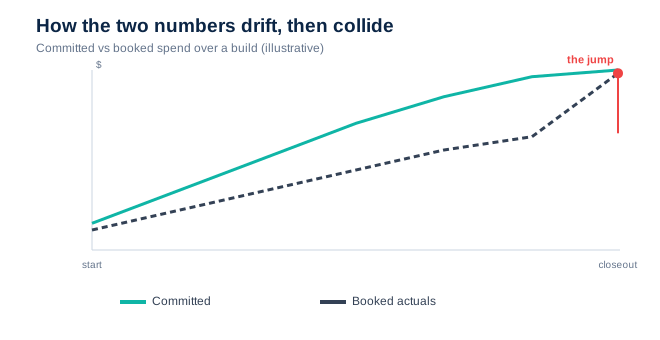
Here is the part that catches people: the gap almost always runs one way. The project team's number is higher, because commitments lead actuals. They have promised money Finance has not recorded yet. Which means when Finance's number finally catches up - when those invoices land - the project does not drift toward the forecast. It jumps. The overrun was there all along; it was just sitting in a ledger nobody was reconciling against the other.
Change orders signed but not yet invoiced - committed on one side, invisible on the other
Holdback and retention, tracked differently by the two teams
Contingency draws the project team counts as spent and Finance counts as available
Purchase commitments that clear months after they are authorized
Tax, freight, or currency the two ledgers book at different moments
Reconciliation is a habit, not a report
The fix is not a better spreadsheet. It is a standing ritual: once a month, the project team and Finance sit down with both ledgers open and walk every line where they disagree. Not to decide who is right - both are - but to name every commitment that has not hit actuals yet and agree on what it will cost when it does. That single meeting converts a future surprise into a present number.
Reconcile monthly, not at closeout - the drift compounds silently between check-ins
Match line by line - commitments against actuals, and explain every gap
Book the pipeline - list signed-but-uninvoiced commitments as a known future draw
Report one number - a single reconciled forecast both teams stand behind
What to do tomorrow morning
Ask your two teams for their current forecast on the same project - separately, without letting them compare first. If the numbers match to the dollar, you have a genuine reconciliation habit. If they are apart by six figures, you have just found your next surprise before it found you. The gap is not a math error. It is a conversation that has not happened yet - and it is far cheaper to have it in a meeting than in a year-end review.
This is the exact blind spot we built XNM-VISION to close: commitments, actuals, and the project record in one place, so the two ledgers reconcile against each other instead of colliding at year-end. But even with no software at all, a monthly line-by-line reconciliation will surface the gap while you can still do something about it.
A budget that quietly splits into two is the same failure that hides in lost change orders and untracked contingency - we keep pulling that threadacross the field notes on the blog. Reconcile the two ledgers on a schedule, and the surprise at year-end becomes a number you saw coming.