The Permit Tracker Every Project Should Have
The mine didn't stop for a geology surprise or a market crash. It stopped because a single operating permit expired on a Tuesday, and no one had been watching the calendar. The renewal took ninety days to process; the gap between the lapse and the reissue was two weeks of idle equipment and paid crews standing down. The permit had always been renewable - routinely, almost automatically. The failure wasn't the regulator. It was that no one owned the date.
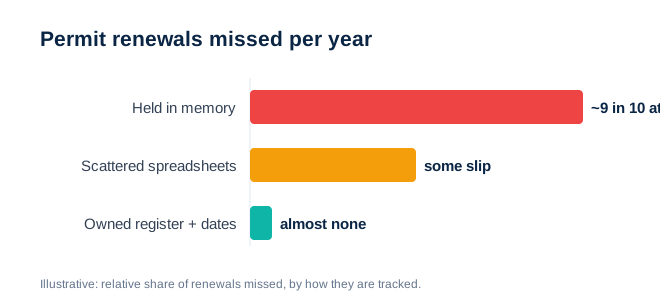
Here's the uncomfortable part: this is one of the most preventable stoppages in any capital-intensive operation, and it happens constantly. Not because permits are hard to renew, but because a live project carries dozens of them - environmental, water, air, tenure, blasting, transport - each with its own authority, its own term, and its own renewal lead time. Track them in your head and you will eventually miss one. The only question is which, and how expensive.
Why permits slip when nothing else does
Permits fail quietly because they have no daily heartbeat. An invoice nags you; a deadline has a person attached; a broken machine screams. A permit just sits, valid, for eighteen or thirty-six months - long enough that the person who obtained it has changed roles, and the renewal window opens with no one assigned to notice. By the time anyone remembers, the lead time you needed is already gone.
The trap is that permits feel like a solved problem the moment they're granted. You celebrate approval, file the certificate, and move on to the work the permit unlocked. But a permit isn't an event - it's a clock that started ticking the day it was issued. The organizations that never get surprised are the ones that treat the grant as the beginning of a countdown, not the end of a task.
What a real permit tracker contains
It is not complicated - a spreadsheet does it, if someone owns it. The point isn't the tool; it's that six fields exist for every permit and someone looks at them every month:
The permit and authority. What it is, who issues it, and the reference number - so anyone can find the actual document in seconds.
The expiry date. The single most important field, and the one most often left blank or wrong.
The renewal lead time. How long the authority actually takes - so the reminder fires early enough to matter, not the week it lapses.
The named owner. One person accountable for this permit's renewal, by name - not a department, not "operations."
The conditions to maintain. The monitoring, reporting, or limits attached to the permit, so compliance doesn't drift between renewals.
The document link. A path straight to the signed permit and its correspondence, so the record and the reminder live together.
The reminder has to reach a person, early
A tracker only works if it pushes. A list you have to remember to open is just a nicer place to forget. Whatever you use, the renewal date should trigger a reminder to the named owner well before the lead time runs out - months early for a slow authority. This is exactly the kind of standing obligation a system like XNM-VISION is built to hold, so a lapse becomes a flag on a dashboard instead of a crew standing idle in a pit. But even a shared spreadsheet with owners and dates, checked monthly, beats the confident silence that precedes every expiry.
Tomorrow, list every permit your operation depends on and put an expiry date and a name beside each. If you can't fill in either column for even one of them, you've just found the permit most likely to stop you. Watching the calendar is cheaper than watching idle equipment - by a margin you don't want to measure the hard way.
A missed renewal is an overrun with a due date you could see coming - more on the small records that prevent big stoppages.