The Insurance Certificate That Lapsed Mid-Build
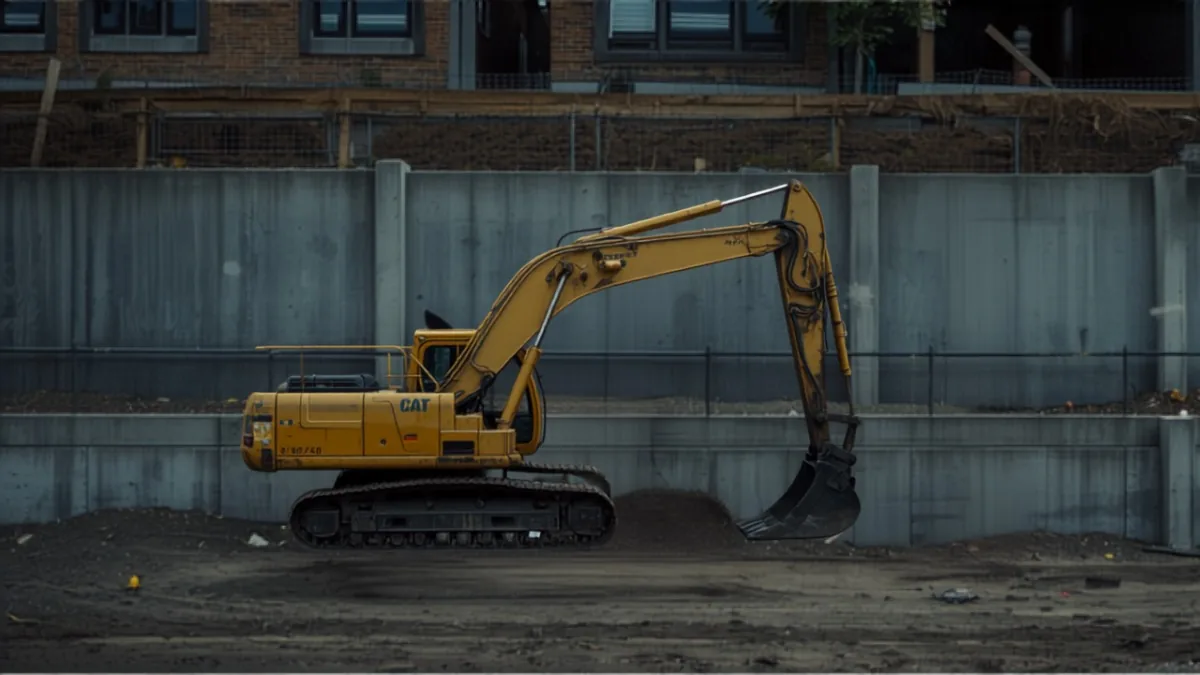
The excavator clipped the neighbour's retaining wall on a Tuesday morning. It was not a serious accident. It became an expensive one about four hours later, when someone pulled the excavation contractor's certificate of insurance out of the project folder and read the expiry date on it. The certificate had run out the previous Thursday.
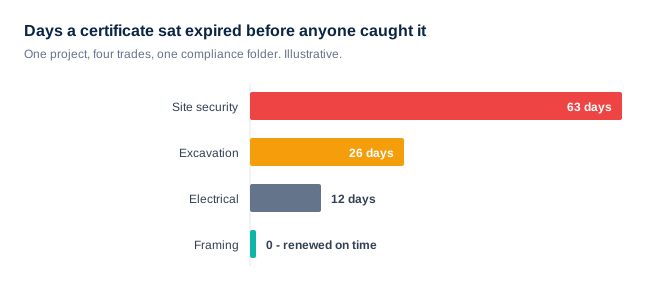
Nobody had revoked anything. No one had made a decision. The contractor had been insured at bid, insured at award, insured on the day they mobilised, and uninsured on the day it mattered, and every single person on that project would have told you, in good faith, that the insurance was in the file. It was. That was the problem. Being in the file is not the same as being in force.
A certificate is a photograph, not a guarantee
A certificate of insurance describes a policy on the day it was issued. It has a start date and an end date, and the end date is usually about twelve months out. A commercial build runs eighteen to thirty months. Do the arithmetic and the conclusion is uncomfortable: on any project long enough to be interesting, most of the certificates in your compliance folder will expire before the work does. Not some of them. Most.
That would be fine if the folder knew what a date was. On this project it did not. The compliance tracker had a column called Insurance, and the column held a checkmark. Checkmarks do not expire. Dates do.
The certificate of insurance. Twelve months from issue, renewed by a broker who has never heard of your project and has no reason to send you a copy.
The workers' compensation clearance letter. Often valid for a matter of weeks, not months, and the one most likely to be stale on any given day.
The prequalification or business licence. Annual, jurisdiction-specific, and quietly required by the very contract clause nobody rereads after signing.
The bonding or capacity letter. Dated the day the deal was structured, and treated ever after as a permanent fact about the company.
Four documents, four different renewal cycles, none of them synchronised with your schedule and none of them designed to tell you when they stop being true.
What the gap actually cost
The retaining wall was a small repair. The lapse was not. The developer's own policy answered for the damage, which meant a deductible, a claims record, and a renewal conversation the following year that started from a worse position than the one before it. Counsel spent the better part of five weeks establishing who was liable for a wall that would have cost a fraction of the legal fees to rebuild. And because the project was drawing on construction financing, the lender's quarterly compliance review picked up the same lapse independently, which turned an operational embarrassment into a funding conversation.
None of that was caused by the excavator. It was caused by a checkmark.
The fix is a date field, not a bigger folder
Storing the document is the easy half. The half that protects you is storing the expiry date as data the system can read, next to the name of the party it belongs to, so that the file can raise its hand. Forty-five days out, someone asks the broker. Fifteen days out, it escalates to whoever can stop work. On the day it expires, site access is a question rather than a formality.
That is not a software problem so much as a discipline one, and you can test where you stand this afternoon. Open your compliance register and count how many entries hold a real date and how many hold a tick, a Y, or the word received. Every tick is a document you are trusting without knowing whether it is still true. Then check the one class of party most projects forget entirely: the subcontractors your subcontractors brought with them.
Every expiring obligation on a project behaves this way, from insurance to permits to warranty periods to the retention release you owe someone eleven months from now. If this made you want to go and look at your own register, the rest of these field notes are built from the same kind of afternoon.