The Hospital Wing That Was Built Twice
The mechanical room on the new patient wing was framed, plumbed, and nearly sealed up before anyone realized it had been built from a drawing that was retired six weeks earlier. The corrected set existed. It had been reviewed, stamped, approved, and filed. It simply never reached the three people on site holding the tools.
So the wall came down. The pipe came out. The crew rebuilt the same room a second time, to the spec that had been correct all along — the one sitting in a folder a few miles away. Nobody had been careless. The designer issued the revision. The reviewer approved it. The document-control inbox received it. And the field built, in good faith, from the most recent paper they actually had in their hands. The most expensive thing about this failure wasn't the rework. It was how ordinary it was.
A change that lived only in the office
Healthcare builds are unusually exposed to this. A single wing pulls in dozens of trades, multiple consultants, infection-control and medical-equipment requirements that arrive late, and a drawing set that gets revised again and again right up to — and past — the start of construction. Every one of those revisions is a small promise: this is now the truth, build to this. But a promise that never leaves the office isn't a promise the field can keep.
In this case the revision changed a routing detail — minor on paper, structural once it was inside the wall. The office knew. The field didn't. Between them sat a handoff everyone assumed had happened: 'we sent it.' But sending is not receiving, and a PDF landing in an inbox is not the same as an outdated set being physically pulled off the trailer wall. The old drawing stayed up. The crew trusted it. Why wouldn't they?
'We sent it' is not 'they're building from it'
This is the gap that quietly produces rework on project after project: the distance between a document being updated and that document being acted on. Issuing a revision feels like completing a task. It isn't. The task isn't done until two things are true — the people who need the new version actually have it, and the old version can no longer be mistaken for current. Miss either one, and you haven't changed the building. You've only changed the file.
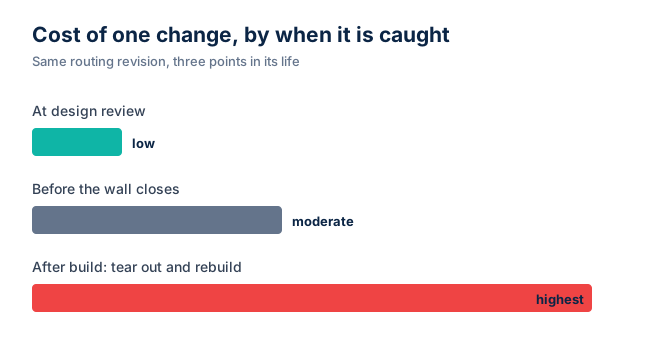
A revision isn't finished until the old one is dead
The teams that don't build things twice treat distribution as part of the change, not an afterthought to it. Every revision has a controlled list of who must receive it. Receipt is acknowledged, not assumed. And — the step most people skip — the superseded version is actively removed from where work happens, or stamped so plainly obsolete that no one could build from it by accident. One current set, everywhere, with a clear trail of who holds it. That's the whole game.
You can't inspect your way out of this after the fact; by then the wall is up. You prevent it upstream, by making 'the latest drawing' a fact the field can verify in seconds instead of a hope the office quietly holds. So tomorrow morning, ask one question about your most active project: how would a person on site actually know they're building from today's drawing and not last month's? If the honest answer is 'they'd assume,' you already have a wing waiting to be built twice.
We take apart a different one of these every week in our Anatomy of an Overrun series.