One Chart: The True Cost of a Records Request

When a municipality logs a freedom-of-information request, the cost on the spreadsheet is an hour or two of staff time. The cost in reality is a clerk emailing four departments, three people searching their own inboxes, a manager approving redactions, and a statutory clock ticking the whole time — usually spread across days. The visible cost is the tip. The iceberg is the hunt.
A single records request is the closest thing to a surprise audit that most public bodies ever face. Someone outside asks, on a legal deadline, for records you're obligated to produce — and how that goes reveals everything about how findable your information actually is. The chart below shows where the time really goes. It is not where you bill it.
The hour you bill vs. the days you spend
Logging and acknowledging the request takes minutes — and that's usually the part that gets recorded as 'the cost.' The real time goes somewhere else: locating records that live in a shared drive, an email thread, a personal folder, a filing cabinet, and one retired employee's memory; confirming you've actually found everything (the part that quietly eats the most hours, because you can never be sure); then reviewing and redacting before anything goes out the door. None of that shows up on the line item. All of it shows up on the calendar.
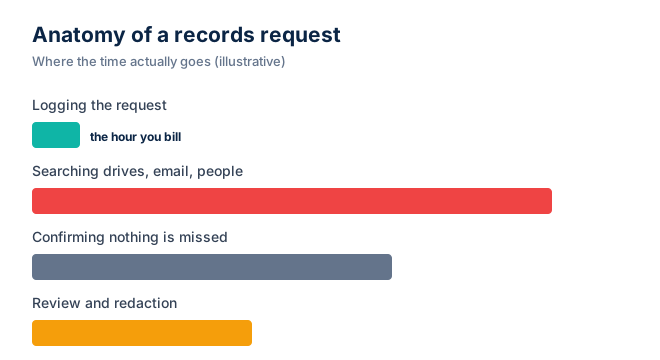
And here's the part that should worry a records manager: the hidden block isn't fixed. It scales with disorder. The messier the records, the longer the search, the higher the chance you miss something, and the closer you get to blowing a deadline that carries legal consequences. Two municipalities with identical request volumes can have wildly different costs — and the difference is entirely in how their records are kept.
Picture a routine one: someone asks for all correspondence about a road-closure decision from two years ago. Simple, on its face. But the manager who made the call has moved on. The emails are split across three inboxes, two of them archived. The decision memo sits in a project folder named after a contractor, not the road. A councillor's note lives in a meeting packet nobody digitized. None of it is truly lost — it's just scattered, and reassembling it into a complete, defensible response is a two-day archaeology dig dressed up as a one-hour task. Multiply that by every request in a year, and the hidden cost stops being hidden.
Findability is the lever
You can't reduce how many requests arrive; that's set by law and by the public's right to ask. But you can reduce what each one costs, and the entire cost lives in the hunt. Every hour spent finding is an hour you could delete by knowing where things are before anyone asks. So measure it honestly: time your next request end to end, from logged to released. The gap between that number and the hour you wrote down is your records-risk number — and it's almost certainly bigger than anyone upstairs thinks.
This is the quiet cost behind the story we told in The 11 Days That Cost $2 Million — worth a read if this one landed.