How to Run a Capital Project Status Meeting in 20 Minutes
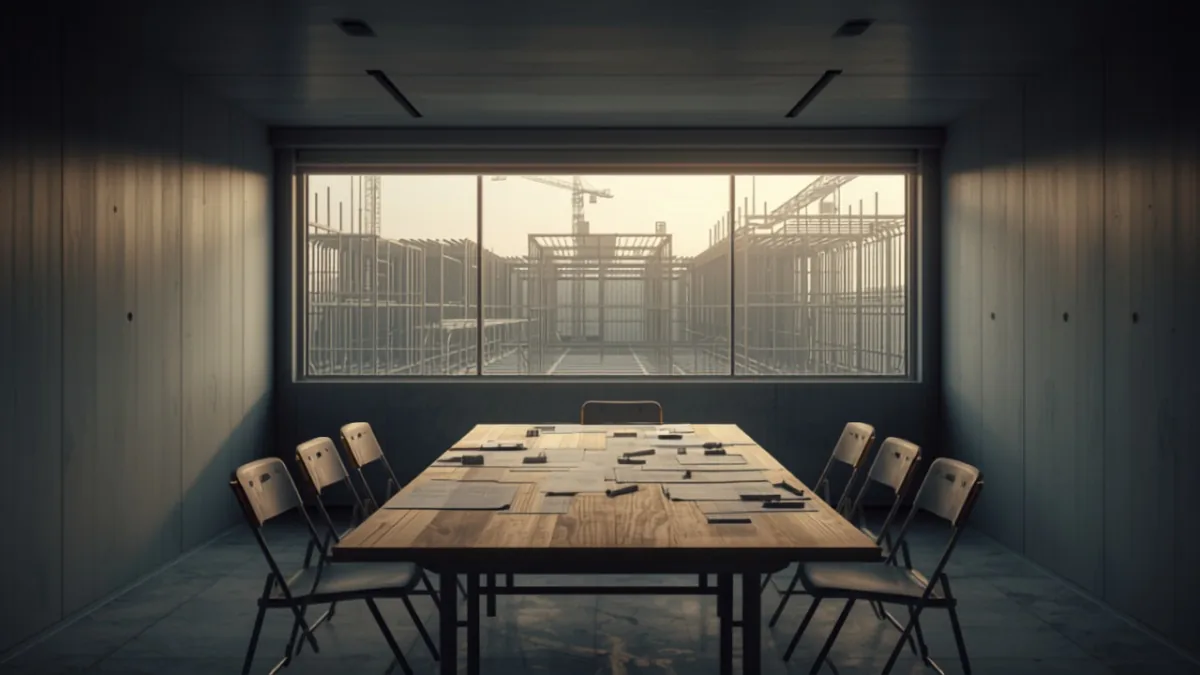
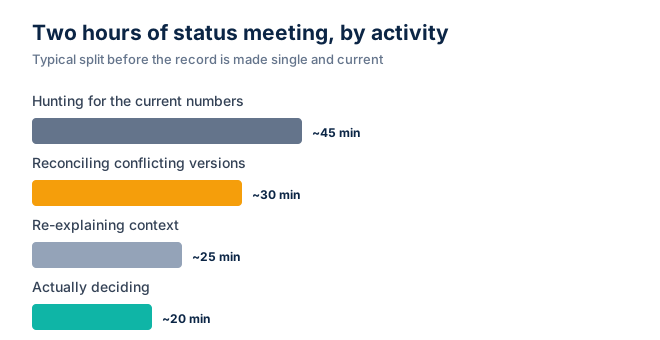
Time the next status meeting you sit in. Not the whole thing — just the part where someone actually decides something. On most capital projects it is shockingly short. Twenty minutes of real decisions are buried inside two hours of something else entirely: people reconciling spreadsheets, correcting each other's numbers, and slowly assembling, out loud and in real time, a picture of where the project actually stands.
We blame the agenda. We blame the talkers. We trim the invite list and set a timer. None of it works for long, because the length of the meeting was never really about the agenda. It was about the record. The meeting runs long because the meeting is the first moment in the week when everyone's separate version of the truth is forced into the same room — and reconciling those versions live, in front of an audience, is the slowest possible way to find out what is going on.
Most of the meeting is reconciliation, not decision
Watch where the two hours go and a pattern appears. A chunk is spent hunting: pulling up the latest schedule, finding the right cost report, asking whether this is the current change-order log or last week's. Another chunk is spent reconciling: the PM's number and finance's number disagree, so the room debates which is right before it can even discuss what to do. Another chunk is spent re-explaining context to the one person who missed it. By the time the group is ready to actually decide something, half the room has mentally checked out and the clock has eaten most of the hour.
None of that is a decision. It is the cost of arriving at the meeting with five versions of reality instead of one. And it is completely avoidable — not by talking faster, but by making the reconciliation unnecessary before anyone sits down.
Fix the record, and the meeting fixes itself
The twenty-minute status meeting is real, and it is not a productivity hack. It is what is left over when the reconciliation has already happened — automatically, continuously — before anyone walks in. Here is how teams get there.
One source, updated as work happens. Schedule, cost, change orders, and open issues live in one place that everyone reads from and writes to, so 'the latest' is never in question.
The status is current before the meeting, not assembled during it. If the dashboard is already true on Monday morning, nobody spends the meeting building it out loud.
The meeting is for decisions and exceptions only. If a number isn't a decision, a risk, or a change, it doesn't get airtime — people already read it.
Every decision is written down where it lives, immediately. So next week starts from a record, not from someone's memory of what was agreed.
Notice that none of these are meeting techniques. They are records practices. The meeting got shorter as a side effect of the project finally having one current truth instead of five competing drafts. That is the trade worth making: stop optimizing the meeting and start fixing the thing the meeting was secretly trying to rebuild every week.
Try one experiment at your next status meeting. Before it starts, ask everyone to bring the single number they would have spent time reconciling — the budget figure, the percent complete, the open-change count. If two people show up with two different numbers for the same thing, you have just found why your meeting takes two hours. Fix that, and twenty minutes is not optimistic. It is what is left when there is nothing to argue about except the decision itself.
More practical playbooks like this live in our Field Guide series.