One Chart: Why Projects Slip in Month Six

Ask a room of experienced project managers when a capital project first starts to feel like it is slipping, and you will hear the same answer more often than chance would allow: around month six. Not month one, when optimism is high and the plan is clean. Not the final stretch, when everyone expects pressure. Month six — the quiet middle, where nothing dramatic has happened and yet the schedule has somehow gone soft. There is a reason, and it is not bad luck.
The Month-Six Rule, as some teams call it, describes a failure that builds invisibly and then arrives all at once. For the first several months, a project generates small, easy-to-defer loose ends faster than anyone notices: a decision made in a hallway but never written down, a change discussed but not formally logged, an open question parked for later, a number that finance and the field never quite reconciled. Each one is trivial. None of them, on its own, moves the schedule. So they accumulate.
The backlog you can't see is still growing
The chart below is the whole argument. Plot the running count of unresolved record-work — undocumented decisions, unlogged changes, open items waiting on someone — month by month, and it does not stay flat. It climbs, gently at first, because early-project momentum hides it. Everyone is busy, everything feels under control, and the backlog grows underneath the optimism. Then, somewhere around the middle of the project, that quiet pile crosses a threshold. The unanswered questions start blocking each other. A decision can't be made because it depends on another that was never recorded. The schedule doesn't slip because of one big event; it slips because the accumulated weight of small unfinished records finally becomes too heavy to carry.
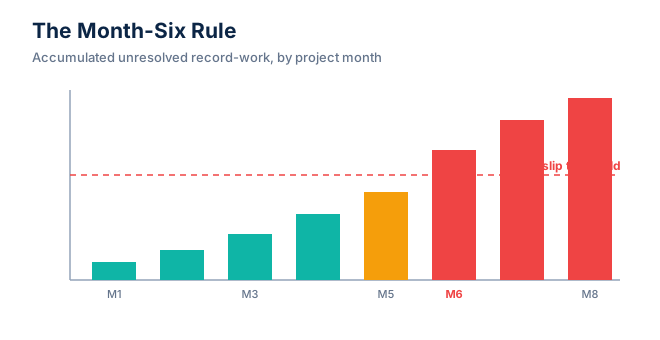
The fix is upstream, in months one through five
The trap of the Month-Six Rule is that by the time you feel it, the cause is already months behind you. You cannot fix in month six what was created in months one through five. The slip you are feeling now is the bill for records left unfinished when the project felt easy. That is the cruel timing of it: the damage is done in the calm, and collected in the crunch.
Which means the teams that don't slip in month six are not better at firefighting. They are better at not letting the pile build in the first place — by closing the small record-work as it appears, when it is cheap, instead of letting it compound into a mid-project wall. Documenting the hallway decision while it is fresh. Logging the change the day it is agreed. Reconciling the number this week, not next quarter. None of these moves feels urgent in month two, and that is exactly the trap: the cheapest moment to do them is the moment they feel least necessary. Boring, unglamorous, and the single most reliable predictor of whether month six arrives as a normal month or as the month everything came due.
So if your project is in its early, easy months right now, treat that calm as the warning it actually is. Pick one place where small decisions go to die unrecorded — the hallway, the site trailer, the group chat — and give it a home in the record this week. That one habit, started early, is what keeps the quiet pile from ever becoming the month-six wall.
This chart was born from a story we told earlier in our Anatomy of an Overrun series.