The 11% Problem: Why Most Indigenous Loan-Guarantee Capacity Goes Unused — and How to Claim Your Share

A program with roughly $17 billion of capacity behind it sounds like the end of the funding problem. The reality is starker: only about a tenth of that capacity has been put to work. Indigenous loan-guarantee programs — among the most powerful tools ever created to put communities into ownership of major projects — are sitting largely unused. The capital exists. The question is who will claim it.
The barrier is not the money; it is everything around the money. Guarantees activate at financial close, demand a viable deal and a ready partner, and reward communities that already have the financial track record to move quickly. Many communities never reach the starting line — not because the opportunity isn't there, but because the groundwork to qualify for it was never laid.
Recent context
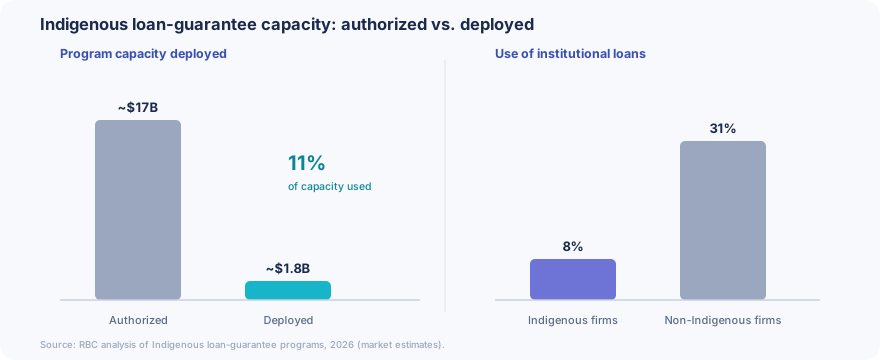
The numbers are striking. RBC's 2026 analysis of Indigenous loan-guarantee programs found roughly $1.8 billion deployed across 26 deals — an 11% utilization rate of the combined capacity — and documented a stark access gap: Indigenous businesses use institutional loans at about 8%, versus 31% for non-Indigenous firms.
Why the capacity goes unused
Several barriers compound. The programs tend to reach communities that have done deals before, while less-experienced communities lag. Scale mismatches leave both small and very large projects underserved. And the timing problem means capital arrives only once a deal is commercially viable — after the early, decisive choices are made. The common thread is readiness and access, not the size of the program. The communities that draw on this capacity are the ones already built to qualify for it.
How XNM helps
XNM helps communities become the kind of partner these programs are built to back — before a specific deal is on the table. We strengthen the financial track record, governance, and documentation that turn a community from a late applicant into a credible early principal, and where it helps, XNM-Vision keeps the financial and project record audit-ready so due diligence confirms strength. The goal is to move a community from the majority that watch to the minority that act.
Practical takeaways
Build a bankable track record. Several years of clean, audited financials are what let a community move when a guarantee is on offer.
Pre-position your governance. Decision rights and approvals worked out in advance let you say yes at deal speed.
Know the programs before you need them. Understand which instrument fits which project so you are not learning the rules mid-negotiation.
Close your own access gap. Build banking relationships now so you are not starting from zero when capital is available.
Get due-diligence-ready. Assume scrutiny and make sure your records confirm strength rather than surface gaps.
FAQ
If the capacity is there, why is utilization so low?
Because using it requires a viable deal, a ready partner, and a financial track record — and many communities have not yet built the readiness to qualify. The constraint is access and preparation, not the program's size.
We have never done an equity deal. Is this realistic for us?
Yes, but it starts before the deal. The communities that participate repeatedly built their readiness first; that groundwork is what makes the first deal possible.
The bottom line
The money is no longer the hard part. The hard part is being ready to claim it. With most of the capacity still on the table, the communities that prepare now will be the ones writing the next wave of deals — and for them, the 11% becomes a much larger number.