From Dollars to Doors: Closing the Indigenous Housing Delivery Gap

Record housing dollars have been announced for Indigenous communities. That is real progress — and it is also where the harder question begins. An announcement is a commitment to spend; a home is a place someone can live. Between the two lies a delivery gap that has frustrated good intentions for decades, and closing it is now the central challenge of Indigenous housing in Canada.
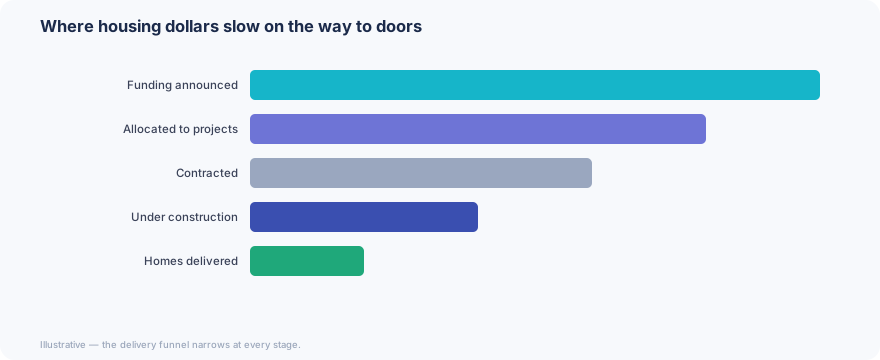
Funding announced is not housing delivered. Dollars have to be allocated to specific projects, projects have to be designed and tendered, contractors have to build, and only then does a family get keys. At each handoff, time leaks away and the number of homes that actually materialize can shrink. The gap is rarely the size of the funding line; it is the capacity to move money through to delivery.
Recent context
The scale of both the investment and the gap is striking. Coverage of Canada's 2026 Indigenous infrastructure agenda describes major commitments such as the Build Communities Strong Fund — roughly $51 billion over ten years, about $3 billion per year — set against an infrastructure gap estimated at around $349 billion, and frames 2026 as the year the test shifts from announcing funding to actually delivering on it.
Where delivery slows
The leaks are predictable once you look for them. Allocation can stall when capital plans are out of date. Tendering can drag without a defensible procurement process. Construction can slip when oversight is thin or a single staff member holds all the project knowledge. None of these is a funding problem; each is a capacity and readiness problem — and each is fixable before it costs a building season.
How XNM helps
XNM helps communities build the delivery capacity that turns housing dollars into homes. We strengthen the capital planning, procurement discipline, and project oversight that keep funding moving through each stage — and, where it helps, XNM-Vision gives leadership a single view of every housing project so a stalled stage is visible before it becomes a missed season. The goal is fewer leaks between the announcement and the keys.
Practical takeaways
Keep capital plans current. Allocation moves fastest when the plan funders draw on is up to date and reflects real priorities.
Make procurement defensible. A clear, documented tendering process prevents the delays and disputes that stall construction.
Watch the handoffs, not just the budget. Most homes are lost between stages; track allocation, contracting, and construction as one pipeline.
Protect project knowledge. Don't let a single departure stall a build — document the project record so delivery survives staff turnover.
Measure homes, not dollars. Report on units delivered, not just funds committed, so the delivery gap stays visible.
FAQ
Isn't more funding the answer?
Funding is necessary but not sufficient. With major dollars already committed, the binding constraint is increasingly delivery capacity — the ability to convert those dollars into built homes on schedule.
We're a smaller community with a lean team. Where do we start?
Start at the handoffs. A current capital plan and a documented procurement process remove the two most common stalls, and they are achievable for a small team with the right support.
The bottom line
The dollars are real and, increasingly, so is the scrutiny on whether they become homes. The communities that close the delivery gap — with current plans, clean procurement, and visible oversight — are the ones who will turn this generational investment into doors that open.