Consulted or Owner? Why 2026 Is the Year Indigenous Communities Move From Influence to Equity

For years, “consultation” was the ceiling of Indigenous involvement in major projects. A community could be heard, accommodated, and asked for consent — but rarely sat on the side of the table that captured the value. In 2026 that ceiling is lifting. Equity ownership is moving from a rare exception to a standard feature of how energy, resource, and infrastructure projects get built in Canada — and the communities ready to act are trading influence for a share of the upside.
Being consulted and being an owner are not the same thing. Consultation gives a community a voice; ownership gives it a vote and a share of the returns. The shift sounds simple, but it changes everything about what a community needs to bring to the table: not just a position to defend, but the capital, the governance, and the readiness to hold and exercise a real ownership stake.
Recent context
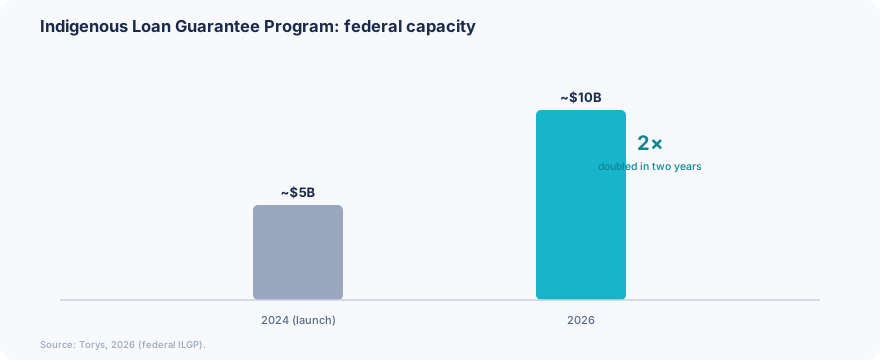
The shift is well underway. Torys' 2026 analysis of Indigenous equity participation reports that offering equity to Indigenous communities is increasingly used by project proponents, that the federal Indigenous Loan Guarantee Program has been doubled from $5 billion to $10 billion, and that successful deals rest on three pillars: respect for Indigenous protocols, creative financing, and a balance of governance rights between the proponent and the community.
What ownership actually requires
Equity is not free, and a guarantee is not a deal. Doubling the loan-guarantee program lowers the capital barrier, but it does nothing about the readiness barrier. To own a stake well, a community needs the governance to exercise its voting rights, the financial systems to hold the asset and report on it, and the decision-making structure to act at the speed a live transaction demands. The communities that convert this moment into ownership are the ones that built that capacity before the offer arrived.
How XNM helps
XNM helps communities prepare to own, not just to be consulted. We build the governance, financial discipline, and decision records that let a community step into an equity role and exercise it with confidence — and, where it helps, XNM-Vision keeps the financial and project record in one auditable place so a partner's due diligence confirms strength. The aim is to make sure that when an ownership offer comes, the community is ready to say yes on its own terms.
Practical takeaways
Decide what ownership is for. Define the outcomes — revenue, jobs, control, legacy — so an equity stake serves the community's goals, not the proponent's timeline.
Build governance to exercise a vote. Ownership comes with decision rights; make sure your governance can use them deliberately and quickly.
Get financing-ready before the offer. Understand the loan-guarantee and financing tools so capital is a solved problem, not a scramble.
Protect the balance of control. Negotiate governance rights deliberately — operational control and community voice can coexist, but only by design.
Treat readiness as the real asset. The doubled guarantee lowers the capital barrier; your readiness is what turns the offer into ownership.
FAQ
Isn't consultation still legally required?
Yes — the duty to consult remains. Ownership does not replace it; it adds a second, more powerful seat. The point is to hold both: the right to be consulted and the chance to own.
We've never held equity in a major project. Is this realistic?
It is, but it starts before the deal. The communities entering ownership built their governance and financial readiness first; that groundwork is what makes a first equity position possible and durable.
The bottom line
Consultation gave Indigenous communities a voice. Ownership gives them a stake. In 2026, with the capital barrier falling, the deciding factor is readiness — and the communities that prepare now will be the ones who move from the edge of the table to the head of it.