Setting Up a Single Source of Truth in a Week

By Friday, everyone on the team knew exactly where to find the current version of any document - and, more importantly, where to put the next one. That sounds like the end of a year-long transformation. It took five working days, and most of the effort went into deciding, not installing.
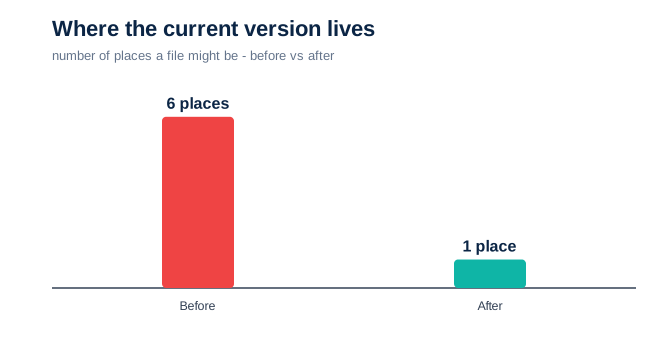
Most organizations don't lose documents because they lack software. They lose them because there are six plausible places a file might be - a shared drive, three inboxes, someone's desktop, a chat thread - and no agreement about which one is real. A single source of truth isn't a product you buy. It's a decision you make and then defend. Here is a realistic week to make it.
The week, day by day
Monday - Pick the one place. Choose a single home for the documents that matter. Don't agonize over the tool; the discipline matters more than the platform. Announce it plainly - from now on, the current version lives here, and nowhere else is authoritative.
Tuesday - Agree the structure. Sketch a simple folder or category structure that matches how the work actually flows - by project, by phase, by document type. Keep it shallow. Deep folder trees are where documents go to hide.
Wednesday - Name things so future-you can find them. Set one naming convention and write it on a single page: what it is, which project, which version, what date. Consistency beats cleverness. A file you can find in a search is worth more than a perfectly filed one you forget exists.
Thursday - Move the live documents only. Resist the urge to migrate everything. Move what is currently in use, plus anything someone might need this quarter, and archive the rest in place. A source of truth for active work is achievable in a week; boiling the ocean is not.
Friday - Set the rule and the owner. Write down the one rule - new and updated documents go here, immediately - and name a person who owns the space. Then tell everyone. A source of truth with no owner drifts back into chaos within a month.
That's it. No procurement cycle, no consultant, no eighteen-month program. The hard part was never the technology. It was getting a team to agree that one place wins, and then behaving as though that were true.
The discipline is the deliverable
A single source of truth degrades the moment people start making exceptions - just this once I'll email it; just this once I'll keep my own copy. The setup takes a week; the upkeep takes a habit. The organizations that hold the line are the ones where putting a document in the right place is easier than not, and where someone notices when it doesn't happen.
When you're ready to go beyond a shared folder - to control who sees what, track who changed what, and prove the current version really is the current version - that's the moment a purpose-built system like XNM-VISION earns its place. But start with the week above. The habit has to exist before any tool can protect it.
Tomorrow, don't buy anything. Just pick the one place and tell your team it's the one place. The rest of the week is defending that sentence.
A single source of truth is the foundation every other records discipline is built on - see how the pieces fit together across a whole project.