One Chart: The Grant-Compliance Burden, Visualized

A non-profit lands a fifty-thousand-dollar grant and celebrates. What the celebration doesn't account for is the second, invisible budget attached to that money: the hours it will take to prove, over and over, that every dollar went where it was promised. For many small organizations, that hidden budget is the real cost of funding.
Every grant comes with a reporting obligation - interim reports, financial reconciliations, outcome narratives, receipts, and sometimes a site visit. Individually, none of it is unreasonable. In aggregate, across a stack of grants each with its own template, portal, and deadline, it becomes a job. And it's a job that usually falls on the same person delivering the actual program.
The load behind every dollar
Consider a modestly funded program held together by a handful of grants. Each funder wants its own report, on its own schedule, in its own format. The compliance work doesn't scale with the size of the grant - a ten-thousand-dollar grant can demand nearly as much reporting as a hundred-thousand-dollar one. Stack four or five of them and a meaningful share of a program coordinator's week disappears into documentation that produces no direct service at all.
It's worth being precise about why the burden grows the way it does. A larger grant rarely means proportionally more reporting; a funder's template, portal, and sign-off cycle cost roughly the same effort whether the grant is modest or large. So each additional funder adds a near-fixed slab of overhead - a new format to learn, a new deadline to track, a new set of receipts to reconcile - regardless of the dollars attached. Five small grants can be heavier to administer than a single large one of the same total value, which is exactly the combination many small non-profits end up living with.
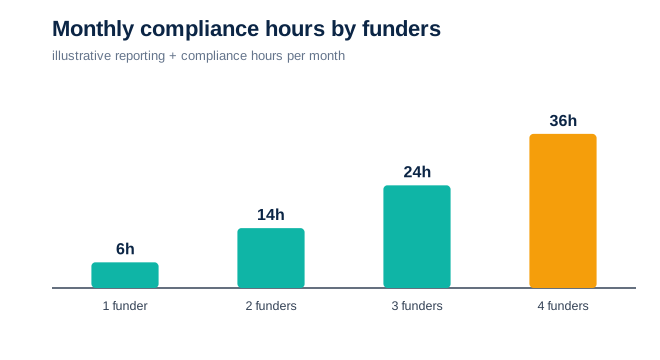
The chart below shows the pattern illustratively: as the number of active funders grows, the monthly hours spent on compliance and reporting climb faster than the funding does. This is the quiet reason grant-funded organizations feel perpetually stretched - the reporting load is real work that no grant line item pays for.
What to do with the pattern
You can't wish the reporting away, but you can stop paying for it five separate times. The organizations that cope best build their compliance evidence once - tracking spending, outcomes, and documentation as the work happens - and then reshape that single record into each funder's format. The reporting still has to be produced, but it's assembled from a maintained record rather than reconstructed from scratch every quarter. The saving isn't glamorous, but it's real: the same underlying evidence, captured once and reused many times, instead of rebuilt from five different starting points.
Tomorrow, add up the actual hours your team spends on grant reporting in a typical month and put a dollar figure on it. That number is your real compliance budget. Once it's visible, you can decide to fund it, systematize it, or factor it into which grants are even worth pursuing. Reporting you can't see is reporting you can't manage.
The compliance burden stays invisible until you measure it - and measuring it is the first step to controlling it. more on the records that make reporting survivable.