One Chart: The Reporting Tax on Project Teams

Add up the hours your project team spends reporting on the work, and compare them to the hours spent doing the work. For a lot of teams, the first number is closer to the second than anyone wants to admit. We call it the reporting tax - and most organizations pay it without ever seeing the bill.
The question this chart answers: where does a project week actually go? Because if nearly half of it is spent describing the work rather than advancing it, that's not a productivity problem. It's a structural one - and it's fixable.
The reporting tax, in one picture
Picture a typical 40-hour week for a project lead on a mid-sized capital project. Here is where the hours tend to go.
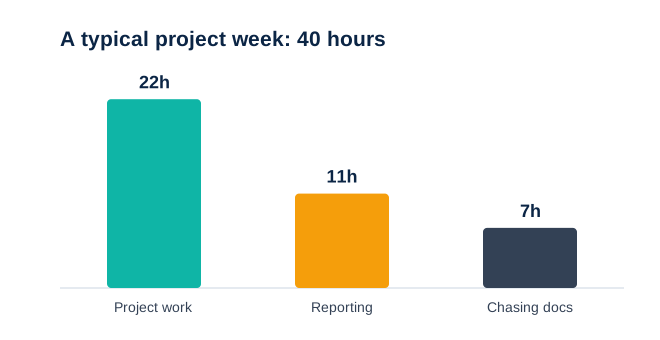
Eighteen of forty hours - nearly half - go to reporting and to hunting down the information needed to report. The actual project work, the reason the role exists, gets what's left. These figures are illustrative and vary by organization, but ask any project lead to track their week honestly and the shape rarely surprises them.
Why the tax is so high
It isn't that status reports are useless - leadership genuinely needs them. The tax is high because the information isn't ready. The hours don't go into writing the report; they go into assembling it: pulling numbers from one system, document status from a drive, change orders from email, and reconciling versions that disagree. The reporting is fast. The gathering is the tax.
Data lives in pieces. schedule here, cost there, documents somewhere else - every report is a re-assembly job.
Everyone reports differently. no shared format means leadership re-asks, and you re-report.
Yesterday's report is already stale. so you rebuild it from scratch next week instead of refreshing it.
The second, hidden cost
There's a cost beyond the lost hours, and it's worse: the work that doesn't get done. Every hour a project lead spends assembling a status report is an hour not spent unblocking a subcontractor, catching a budget drift early, or making the decision that keeps the schedule honest. The reporting tax doesn't just burn time - it quietly trades your most experienced people's judgment for clerical work. On a tight project, that trade is the difference between catching a problem in week three and discovering it in month three.
How to lower the bill
You lower the reporting tax by making the information report itself - collected once, in one place, current, so a status update is a view, not a project. The goal isn't fewer reports; it's reports that cost minutes instead of days.
Capture once, report many. enter cost, schedule, and document status in one place and let every report draw from it.
Standardize the format. one agreed report shape kills the re-ask loop.
Make current the default. a live view beats a weekly rebuild - the report is never out of date because it's never rebuilt.
This week, ask one person to log the hours they spend gathering versus doing. Put a number on your reporting tax. You can't cut a cost you've never measured - and once you see it, you won't unsee it.
That buried half-week shows up everywhere once you look - we keep finding it in the data.