Naming Files Like Someone Will Need Them in Five Years

Five years from now, someone who has never met you will open a folder you created today, looking for the one document that settles a dispute. They will find Final_v2_USE-THIS.docx, contract_latest(3).pdf, and signed_REAL_final.pdf, all modified within the same week, and they will have no idea which one is the executed agreement. That person might be your replacement. It might be you.
A file name is the smallest, cheapest, most ignored piece of records discipline there is — and the one that fails most reliably. We name files for the version of ourselves with perfect context: who remembers that latest meant the one before the lawyer's redline, that v2 was actually the third draft, that the real signed copy is the one with the odd date. That context has a shelf life of about two weeks. The file name has to outlive it by years.
A file name is a message to a stranger
The whole art of naming is to write for someone with zero context — because that is who eventually reads it. A good name answers, without opening the file and without trusting the folder it sits in, four questions: when, what is this about, what kind of document is it, and what state is it in. 2024-03-14_Maplewood_Lease_SIGNED.pdf answers all four at a glance. final lease.pdf answers none of them, and quietly lies about being final the moment a revised final arrives.
The rules that make a name survive turnover
Lead with an ISO date (YYYY-MM-DD). It sorts chronologically on its own, it is unambiguous across borders, and it puts the single most reliable fact about a document first.
Use a controlled vocabulary for document types. Lease, Invoice, Permit, Minutes, Drawing. Pick the words once and reuse them, so a search for Permit finds every permit you have.
Version with v01, v02 — never final or latest. Numbers count upward forever. Final is a promise the next email always breaks.
Put the status in the name. DRAFT, FORREVIEW, SIGNED, SUPERSEDED. The name should tell you whether you can rely on the document before you open it.
Make the name work without the folder. Files get moved, copied, and emailed out of context. A name that only makes sense three folders deep fails the moment it travels.
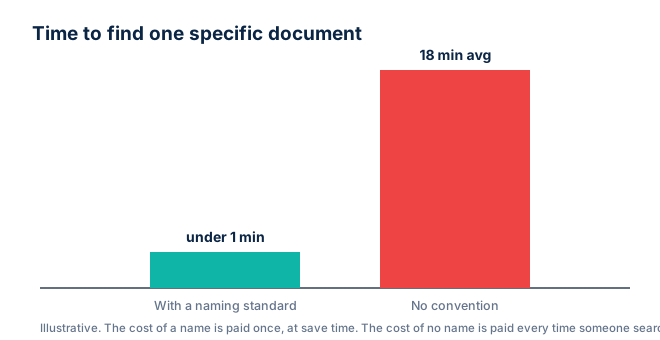
None of these rules are about tidiness for its own sake. They are about a specific, recurring moment: the day someone needs a document and the person who made it is unavailable — on vacation, on another project, or gone from the organization entirely. A naming convention is the cheapest insurance you can buy against that moment. It costs a few seconds at save time and saves hours, sometimes a dispute, at find time.
The test that tells you if it works
You do not need a policy document to know whether your naming holds up. You need one honest test: hand a new colleague a short list of documents to find — the signed lease, the latest approved drawing, last quarter's board minutes — and watch. If they find them all without asking anyone a question, your names are doing their job. If they have to open six files to find the right one, or come ask you which final is the real final, your convention is living in your head, not in your file names.
Adopt the convention this week, on new files first; you do not have to rename the past to fix the future. The standard that matters is not the most elaborate one. It is the one simple enough that everyone actually follows it five years from now, when you are not there to explain what latest meant.
This is one habit in a larger set we keep returning to: the small, unglamorous disciplines that decide whether a project stays findable. More of them live in our field guide series, from version control to setting up a single source of truth.