How to Stop Email From Being Your Filing System
Try this: find the approval for your third-largest active commitment right now, without asking anyone. If your first instinct was to open your inbox and start typing keywords, your filing system is email — and email is about to let you down.
Almost every team drifts into this without deciding to. Email is where the document arrived, so email is where it stayed. It feels organized because you can search it. But an inbox is a delivery system, not an archive, and the difference becomes brutally clear the day the one person who has the thread is on leave, has left, or simply can't remember which of 4,000 messages it was.
Why the inbox always wins by default
Email doesn't take over because anyone chose it. It wins because it's frictionless in the moment. The contract lands as an attachment; the approval comes back as a reply; the revised drawing shows up in a forward. At no point does anyone have to stop and file something. The record assembles itself inside a personal mailbox — scattered, private, and invisible to everyone else on the project.
That's fine until you need it. Then the cracks show. The record is siloed in individual inboxes, so no one has the whole picture. It's unstructured, so the only way in is a keyword you have to guess. And it's fragile: when someone leaves, their mailbox is deprovisioned, and a chunk of the project's memory leaves with them.
What it actually costs to find a decision
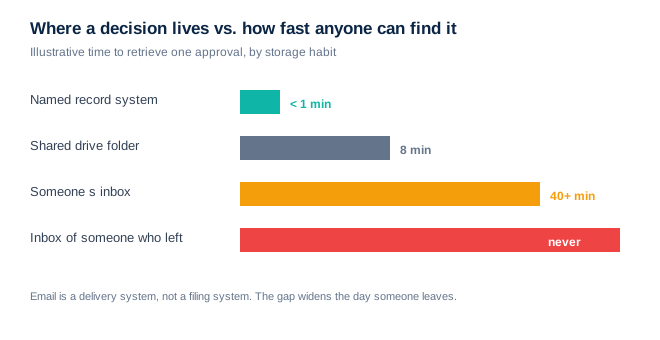
The illustrative retrieval times above tell the whole story. A named record system returns an approval in under a minute. A shared drive takes several. An inbox takes forty-plus minutes of scrolling and guessing — and the inbox of someone who has left returns it never. That last bar is the one that ends up in a lawyer's letter or an auditor's finding.
Getting the record out of the inbox
You don't fix this by declaring email bankruptcy or banning attachments. You fix it by giving records a home that isn't a person's mailbox — and making the trip there short enough that people actually take it:
Name the system of record. Pick one place where the approved, final version of a document lives. If everyone can name it, half the problem is solved.
File on receipt, not "later." The moment a decision or final document arrives, it goes to the record — before it can settle into a thread.
Link, don't attach. Circulate a link to the record instead of a copy. One source, no forked versions drifting apart in a dozen inboxes.
Make leaving safe. When someone departs, the project's memory should already be out of their mailbox. Offboarding shouldn't be an archaeology dig.
The test is simple: could a new colleague, on day one, find your key project decisions without messaging a single person? If yes, your records have a home. If no, they're still hostage to whoever happens to have the thread.
The habit that pays for itself
Getting records out of email is one of the highest-return habits a team can build, because it pays back every single time someone is away, forgets, or leaves. This is the exact chaos we built XNM-VISION to end — one findable place for the decisions that matter — but even if you never touch our software, moving the record out of the inbox will save you a bad afternoon you can't yet see coming.
An inbox is where records go to get lost. For more plain-spoken ways to keep one version everyone trusts, read more on the XNM blog.