What Happens When the Auditor, the Board, and the Lawyer All Ask at Once

It rarely happens one at a time. The auditor opens a routine review, the board asks for a decision history ahead of a meeting, and a lawyer requests the file for an unrelated dispute — all in the same week. Three requests, one record set, and suddenly everyone needs the truth at once.
How that week goes was decided months earlier, on an ordinary day when someone either filed a decision properly or left it in a thread. By the time three stakeholders are all asking, it's far too late to get organized. You're either handing over a file or you're scrambling — and the scramble is where mistakes, missed documents, and genuine risk live.
Same file, three different questions
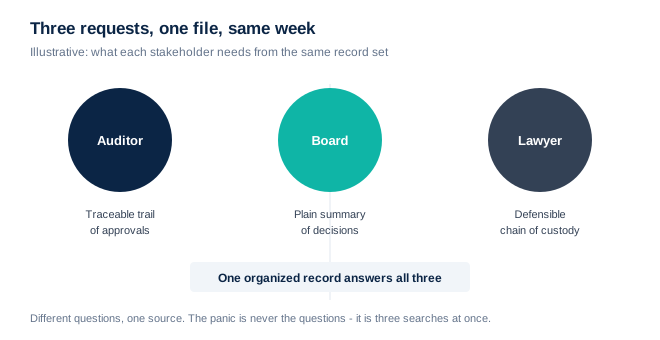
The reason it feels like chaos is that each stakeholder wants something different from the same underlying records. The auditor wants a traceable trail: who approved what, when, in order. The board wants a plain-language summary: what was decided and why. The lawyer wants a defensible chain of custody: proof the record is complete and unaltered. Three questions, one source. When the records are organized, one well-kept file answers all three. When they aren't, you run three frantic searches in parallel — and each one competes for the same exhausted people.
The scramble tax
A disorganized response doesn't just cost time; it compounds risk at the worst possible moment. Under deadline pressure, people reconstruct decisions from memory and get details wrong. Documents get missed, and a gap in the file reads to an auditor or a court exactly like a gap in the governance. Worst of all, the version someone grabs in a hurry may not be the final one — and now you've handed an authority the wrong record with full confidence. The scramble doesn't just slow you down; it manufactures new problems while you're trying to solve the old one.
What readiness actually looks like
Being ready for all three at once isn't about predicting when they'll ask. It's about keeping the record in a state where the question is boring. A few habits get you there:
One version of the truth. A single final record per decision, so no one ever has to wonder whether they grabbed the right draft.
A trail that's already built. Approvals dated and attributed as they happen, not reconstructed under pressure after the request lands.
Findable without a guide. Anyone authorized can retrieve the file without the one person who "knows where things are."
Complete on a normal day. The file is audit-ready every Tuesday, so the surprise request is never actually a surprise.
The goal is a boring Tuesday
The measure of a good records system isn't how fast you can scramble; it's that you never have to. When the auditor, the board, and the lawyer all ask in the same week, the whole event should feel like three routine downloads instead of a crisis. That's the calm we built XNM-VISION to deliver — but the underlying principle stands on its own: keep the file ready on the quiet days, and the loud days take care of themselves.
The day everyone needs the file at once is decided long before it arrives. For more on keeping records calm under pressure, read more on the XNM blog.