How to Make Reporting a By-Product, Not a Project

Ask a project team how long the monthly report takes and you'll hear a shrug and a number that's too high. Not because writing a report is hard, but because they aren't writing a report. They're reassembling one from scratch, chasing numbers across five systems and three inboxes, every single month.
That's the trap. Most teams treat reporting as a project: a recurring, days-long scramble to gather, reconcile, and format information that already exists somewhere. It doesn't have to be. When your records are structured as you work, the report becomes a by-product, a view of data you already keep, not a thing you build. Here's how to make that switch, and why the order of operations matters more than any tool.
Why reporting hurts: you're paying the gathering tax twice
The pain in reporting isn't the writing. It's the gathering. Someone exports the budget from finance, pulls status from the schedule, copies the latest RFI count from an email thread, asks the site super for this week's progress, and stitches it all into a deck. Every month. The same numbers, re-gathered, because they live in different places and no one view holds them together. You pay that gathering tax to produce the report, and you pay it again next month because nothing you did made next month easier.
The shift: report from the record, don't rebuild it
A by-product report works because the reporting layer sits on top of the working record instead of beside it. You don't enter a change order into a tracker and then separately mention it in the report; the report reads the tracker. The discipline is to capture once, at the source, in a structured way, so that reporting is a matter of selecting and presenting, not finding and re-keying.
Define the report backwards from its questions. List the handful of questions the report actually answers — budget vs. actual, schedule status, open risks, changes this period. Those questions define exactly what you must capture at the source. Everything else is noise.
Capture each answer once, where the work happens. Every metric in the report should have one authoritative home, entered by the person doing that work, the moment they do it. A change is logged in the change register, not re-described later in a status email.
Make the report a view, not a document. The monthly pack should pull from those authoritative sources, not from a fresh round of copy-paste. When the underlying record updates, the report updates.
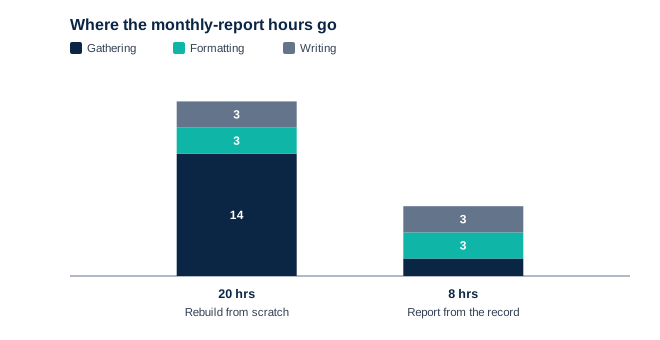
The payoff is almost entirely in the gathering. When the data already lives in one structured place, the hours don't shrink a little, they collapse.
The habit that makes it stick
The reason reporting-as-a-by-product works isn't software, it's sequencing. If the record is captured as the work happens, the report is nearly free. If it isn't, no tool saves you — you're just copy-pasting into a nicer template. This is exactly the problem we built XNM-VISION to end: a project's records held in one structured place, so a report, an audit response, or a board pack is a view you generate, not a fire drill you survive.
What to do before your next reporting cycle
Before the next report is due, pick one recurring metric that currently gets re-gathered every month — say, change-order status — and give it a single authoritative home the team updates as changes happen. Next cycle, read the report from there instead of rebuilding it. One metric proves the pattern; then move the rest. Reporting stops being a project the moment the record starts doing the reporting for you.
This pairs with everything we've written on single sources of truth and closeout discipline. Browse the Field Guide series for more build-it-once, use-it-forever playbooks.