Field Notes: The GC's Daily Battle With Site Documentation

On a busy site, the daily log feels like the least important thing you do. The crew's working, the concrete's pouring, the inspector's coming at two. Writing down what happened can wait. Until a claim lands eighteen months later and that log - the one you almost skipped - is the only thing standing between you and a six-figure loss.
This is the GC's quiet, daily battle: the documentation that feels like overhead today is the documentation that wins the claim tomorrow. The trick is knowing which records actually carry weight - because not all of them do.
The three records that win claims
Most disputes on a construction project come down to three questions: what was happening, what changed, and who was told. Three record types answer them.
Daily logs. weather, crews on site, equipment, work performed, delays. Mundane until a delay claim turns on whether it rained on the 14th.
RFIs and their responses. the request for information and the answer - proof of what was asked, when, and how long the answer took.
Change directives and approvals. the paper that turns we talked about it into it was authorized, with a number and a date.
Why the daily log is the unglamorous MVP
The daily log wins claims precisely because it's boring and contemporaneous. A log written every day, before anyone knew there would be a dispute, is hard to challenge - it has no motive. It's the closest thing a job site has to a black box. The problem is that the value is invisible on the day you write it and only appears months later, which is exactly when people stop writing them.
The good logs share three traits: they're written the same day, they're specific - crew counts, hours, locations, conditions, not worked on building - and they're consistent, so a gap doesn't look like a cover-up. A sporadic log can be worse than none, because the missing days become the disputed days.
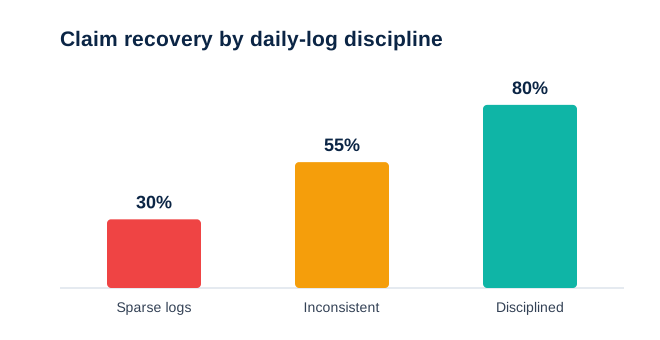
Again, illustrative numbers - but the pattern holds on real projects. Disciplined daily logs recover far more of a legitimate claim than sparse ones, because the adjudicator can see the day-by-day reality instead of taking your word for it. The log doesn't argue. It just shows.
Make the record a habit, not a hero act
Log before you leave. five minutes at end of day beats a heroic reconstruction at month-end.
Capture, don't compose. photos, counts, and timestamps beat polished prose; you want evidence, not an essay.
Keep it where the claim team can find it. a log no one can locate during a dispute is a log that didn't happen.
When logs, RFIs, and change directives live in one place tied to the project, assembling a claim takes an afternoon instead of a frantic week - that's part of what XNM-VISION is for. But the habit comes first: the best system in the world can't log a day you didn't write down.
Tomorrow, treat the daily log as the most valuable five minutes on site, not the last. The claim you're documenting hasn't happened yet - and that's exactly why the record will be believed when it does.
The same write it now, not later rule decides whether a records request buries you - we've told that story too.