Field Notes: Mining's Permit Chain Is a Records Race
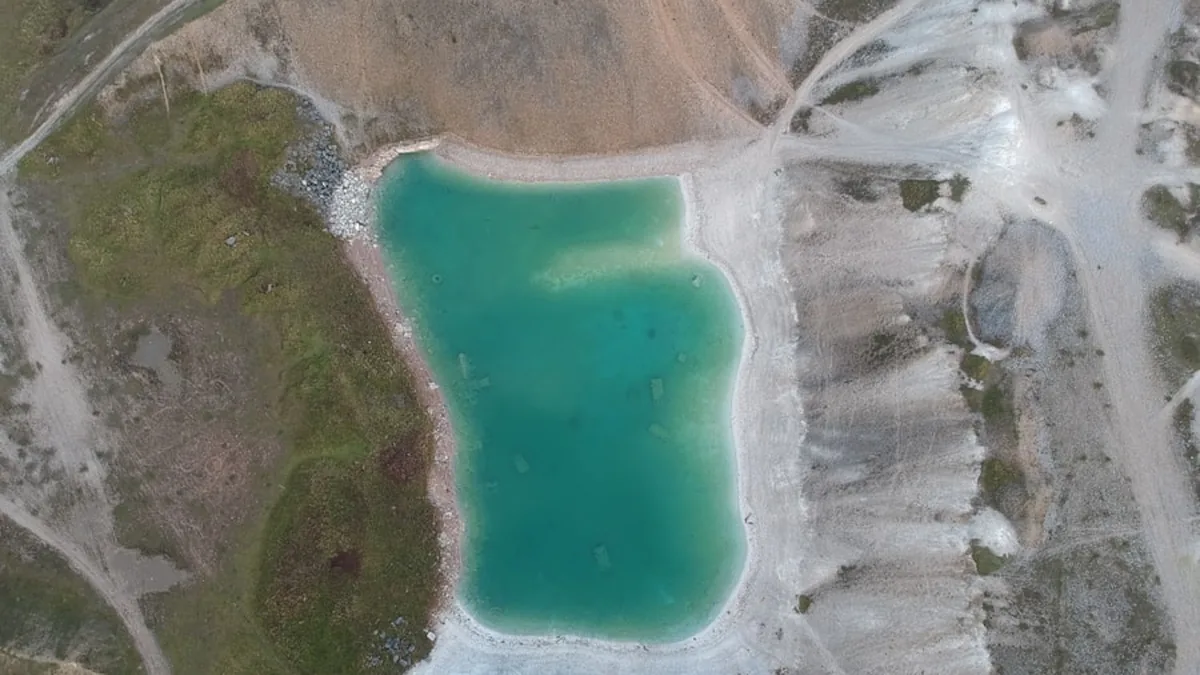
Two mining companies file for the same kind of permit in the same month. Eighteen months later, one is moving dirt and the other is still answering follow-up questions. They didn't draw different regulators, hit different rules, or get unlucky. They kept different records — and in a permit-heavy world, that turns out to be the whole game.
In mining, a permit is never a single document. It's a chain. Exploration leads to environmental assessment, which leads to operating authorizations, which lead to water and tailings approvals, which lead to closure and reclamation bonding. Each link depends on the documented completion of the one before it. A regulator can't advance you to the next approval until you've shown, on paper, that you satisfied the last one. Which means the bottleneck in permitting is often not the regulator's speed at all. It's how fast you can produce the record they ask for. By the end of this you'll see why two identical projects can finish the same chain months apart.
Every approval is built on the evidence of the last one
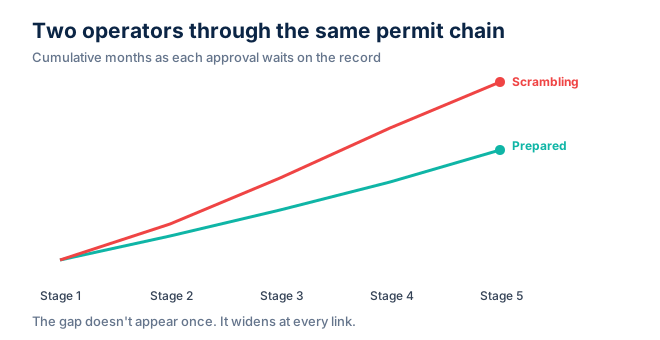
Each stage's application leans on the documented record of everything that came before: baseline studies, monitoring data, consultation records, prior conditions and proof of how they were met. When a regulator asks to see how you satisfied condition fourteen from your last authorization, the company that can produce it that afternoon keeps moving. The company that has to reconstruct it from three drives, two departed consultants, and someone's field notebook waits. And every wait compounds, because the next link in the chain can't even begin until this one closes. A delay early in the sequence doesn't add time once — it pushes everything behind it.
The follow-up question is where the months disappear
A regulator's request for more information is routine; mining permits generate a steady stream of them. The difference between operators isn't whether they get these requests — everyone does — it's the turnaround. An information request that one company answers in days, another answers in months, because the underlying record has to be located, verified, and assembled before anyone can even draft a reply. Multiply that gap across a chain of a dozen approvals and you get the eighteen-month spread between two otherwise identical projects. The records aren't paperwork sitting around the project. On a permitting timeline, the records are the critical path.
And the record outlives the mine
Mining also carries obligations that outlast the operation itself. Engagement with Indigenous nations whose territories host the project, environmental monitoring commitments, and closure and reclamation plans all create records that must stay findable for decades — sometimes long after the original team has retired and the company has changed hands. (This connects to a thread that runs through these Field Notes: for many organizations the record is the only thing that survives the people who made it.) An operator that treats those long-horizon records as a living, owned, findable set — not a box in deep storage — protects both its standing with the communities it works alongside and its legal footing far into the future.
Readiness is the edge
The lesson reaches well past mining. In any permit-heavy world, treat your record set as a competitive asset, not a compliance afterthought. The faster you can produce clean, complete, verifiable evidence on request, the faster the chain moves — and when the chain is the schedule, and the schedule is the economics, the prepared operator isn't just more compliant. It's first to production. The company still hunting through old drives at stage three isn't behind because the work is slower. It's behind because the proof of the work is harder to find.
We see the same race in worlds that look nothing like mining — forestry tenure renewals turn on the very same kind of file. More sector dispatches in our Field Notes series.