Field Notes: Energy Projects and the Inspection Backlog

Spend a week on energy projects right now and you notice the same thing everywhere: the steel is moving faster than the paper. New transmission lines, battery sites, substations, interconnections - the build-out is real and it is accelerating. What is quieter, and rarely on the front page, is that every one of those assets arrives trailing a compliance footprint. Double the grid and you have, almost exactly, doubled the inspections that someone has to schedule, perform, verify, and close.
That last verb is where the backlog lives. Performing an inspection is relatively easy to staff - it is on the schedule, it has a crew. Closing it out - filing the record, resolving the deficiencies, signing the verification - depends on a back-office capacity that rarely scales as fast as the field. The result is a slow, structural drift: completed work outpacing documented work, quarter after quarter.
The paperwork scales with the steel
Here is the trap in energy expansion specifically. The field crews scale with capital - more money, more crews, more megawatts commissioned. But the people who close inspection records, chase down deficiencies, and keep the compliance file audit-ready are a fixed, lean team. So commissioning accelerates while closeout capacity stays roughly flat, and the gap between them is the backlog. It does not announce itself with a crisis. It just grows.
A field-level view of the problem looks like this - open inspection items climbing quarter over quarter, not because the work is bad, but because the rate of finishing work has outrun the rate of documenting it:
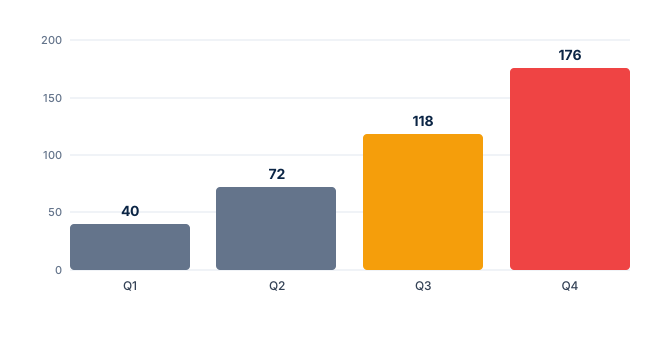
By the fourth quarter, the backlog is not a paperwork annoyance - it is a compliance risk and a balance-sheet question. Every open item is a small uncertainty about whether an asset is fully documented, fully verified, and fully defensible if a regulator or an insurer asks.
What the field-savvy teams do differently
The teams that stay ahead of this do a few unglamorous things consistently:
They treat closeout capacity as part of the project plan, not an afterthought - scaling the back office when they scale the field.
They make the open-item count a number leadership sees weekly, so the backlog is visible while it is still small.
They standardize the inspection record so closing one is fast and unambiguous, not a custom act of archaeology each time.
They never let an asset be declared 'done' until its inspection loop is closed in the file, because 'energized' and 'documented' are two different milestones.
The grid will keep growing; that is the good news and the whole point. But the lesson from the field is simple: plan for the paperwork the way you plan for the steel. The backlog you cannot see today is the audit you cannot pass two years from now.
The inspection backlog is one face of a bigger pattern - work that gets done long before it gets recorded. Read more field notes on the records behind the build for how the same gap shows up in change orders and capital budgets.