The Filing Cabinet Is Lying to You

Ask any team whether they know where their important documents are and you will get a confident yes. Of course they do. It is on the drive, in the system, in the cabinet; everyone knows the way it works. That confidence is almost universal, and it is almost never tested. The filing cabinet, physical or digital, is telling you a comforting story, and the story is a myth — not a lie told on purpose, but a belief that has simply never been checked.
The myth is seductive because it is usually a little bit true. You can find most things, most of the time, when there is no pressure and the person who filed it is still around to ask. The myth only fails in the exact conditions that matter: when the document is needed now, by someone who did not file it, to answer a question that has consequences. That is the moment the gap between knowing where things are and actually finding them opens up, and it opens up precisely when you cannot afford it.
Confidence is not findability
These are two completely different things, and organizations habitually measure the first while assuming it tells them about the second. Confidence is a feeling: we are organized, we have a system, we know our stuff. Findability is a fact: the specific document, in its current version, retrieved by a specific person, in a specific number of minutes. You can have abundant confidence and poor findability, and most teams do, because nobody has ever made them put a stopwatch on the second one.
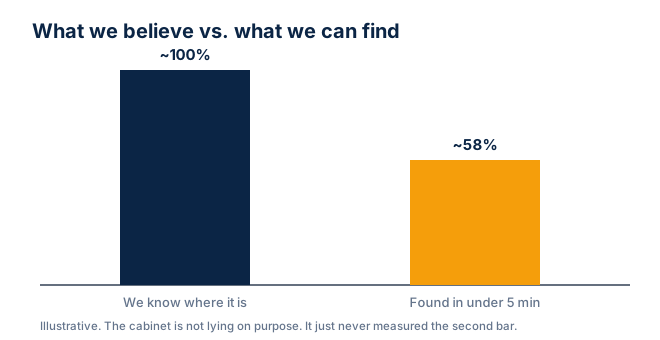
The two bars in that gap are where every real cost hides. The decision made on a stale version because the current one took too long to find. The hours spent reconstructing a document that already existed. The request, audit or deal that stalls while a confident team discovers, in real time, that knowing where something is and producing it are not the same skill.
How the cabinet starts lying
No one builds a dishonest filing system on purpose. It drifts there, one reasonable shortcut at a time.
A document gets saved somewhere quick rather than somewhere correct, because the correct place is two more clicks away.
A version gets updated in one copy and not the others, so now there are several truths and no flag on which is current.
The person who knew the system's quirks leaves, taking the real map with them and leaving the official one, which was always slightly wrong.
Search returns forty results and no way to tell which is the one, so confidence quietly becomes guesswork wearing confidence's clothes.
Each step is individually harmless. Together they produce a cabinet that looks organized, feels organized, and cannot actually answer a hard question on demand — while everyone who relies on it remains genuinely certain that it can.
Put a stopwatch on the myth
The fix begins with a single uncomfortable exercise: test it. Stop asking whether you know where things are and start measuring whether you can find them. Pick five documents that would matter in a crisis — a key contract, the current budget, the latest approved plan, a compliance record, a signed agreement — and time how long it takes a colleague who did not file them to produce the current version of each.
Whatever that exercise reveals is the truth your confidence has been papering over. If it is fast and clean, you have earned the certainty. If it is slow, or it surfaces three versions and a shrug, you have just caught the cabinet in its lie under calm conditions, which is the only forgiving time to catch it. The teams that do this routinely are not more organized by temperament. They simply stopped trusting a feeling and started measuring a fact — and the cabinet, once measured, stops being able to lie.
We test one comfortable assumption like this every week in our records and accountability series. The pattern never breaks: the document was always thought to be findable, right up until the moment someone actually needed to find it.