The 11 Days That Cost $2 Million
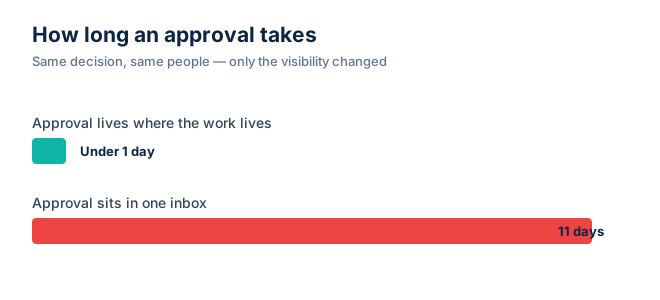
The approval that would have stopped a $2 million mistake was sitting in an inbox. It had been there for eleven days, and no one knew it was waiting.
The project was a municipal water-treatment upgrade. Mid-build, the engineer flagged a change: swap a specified valve assembly for one that actually fit the as-found piping. Sensible, low-drama, the kind of change that happens on every job. It needed the project manager's sign-off. So it was emailed to him. He was on vacation. No backup approver, no one copied, no flag on the file.
Eleven days of silence
The contractor, hearing nothing, did the reasonable thing: kept the schedule and proceeded on the original design. By the time the manager was back and clicked approve, the wrong assembly was installed and half-commissioned. Tearing it out, re-ordering, and redoing the work cost roughly two million dollars and six weeks. The change everyone agreed on had been free. The silence around it was not.
The decision wasn't wrong. It was invisible.
Notice what didn't happen here. Nobody made a bad call. There was no incompetence, no bad faith, no missing expertise. The correct approval existed the entire time — it just lived somewhere the work couldn't see. And an approval the work can't see is, operationally, an approval that doesn't exist.
Where approvals go to hide
An email inbox — one person, no backup, no clock anyone else can see
A 'I'll get to it' pile that has no edge and no owner
A separate system the field crew never opens
A verbal 'yeah, go ahead' that left no trace at all
The fix is not 'be more diligent.' Diligent people made every one of these mistakes. The fix is structural: approvals have to live where the work lives — visible to everyone the decision touches, with a clock anyone can see. When the record and the work are the same thing, eleven days of silence simply can't happen, because the silence itself would be visible. Someone would have seen the change sitting there on day two and walked over to a desk.
We take apart a failure like this every week in our Anatomy of an Overrun series — and closing exactly this gap is why we built XNM-VISION.