The 10-Minute Daily Habit That Keeps Projects Findable
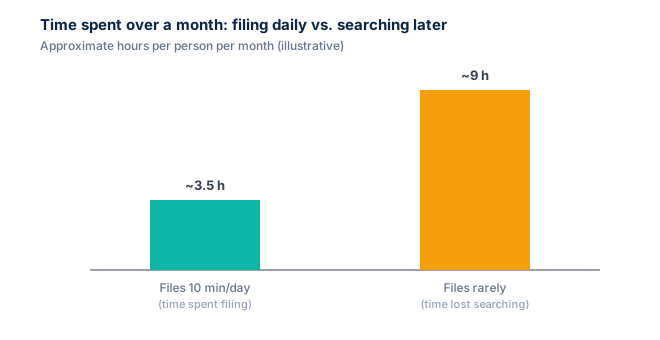
There is a habit that costs about ten minutes at the end of a working day and saves hours every single week after it. It has no software requirement, no budget line, and no learning curve. It is so unglamorous that most teams glance at it, decide it's too small to matter, and skip it - and then spend the rest of the year paying for the skip in fifteen-minute searches that nobody adds up.
The habit is this: before you close the laptop, you put the day's documents where they belong and you name them so a stranger could find them. That's it. The reason it works is not the ten minutes you spend. It's the hundred minutes you don't spend later hunting for the thing you knew you had. By the end of this, you'll see why the cheapest moment to file a document is the moment you create it - and why every minute you wait makes it more expensive.
Filing is cheap when the document is warm
A document is 'warm' the day you make it. You know what it is, why it exists, which project it belongs to, and what should happen next. Naming it correctly and dropping it in the right place takes seconds, because all the context is sitting in your head. Wait a week and the document goes cold. Now you have to reopen it to remember what it was, reconstruct which version is current, and guess where it should live. The filing didn't get harder; the document got colder, and cold documents are expensive to handle.
Multiply that across a team. Every cold document somebody else has to interpret is a small tax: a Slack message asking 'which file is the final one,' a meeting that stalls while two people search, an approval that waits because the thing being approved can't be located. None of these feel like a crisis. That's the trap. The cost never arrives as one big bill; it arrives as a thousand tiny ones, and tiny bills don't trigger alarms.
What the ten minutes actually contains
The discipline is small enough to do tired, at the end of a long day. That's the point - if it requires willpower, it won't survive a busy week. Keep it to a short, fixed routine:
Name for the future reader. Use a name a colleague could understand in five years: project, document type, date, and version. Not 'notes' or 'final-v3-REAL.'
Put it in the one right place. Move it out of your downloads, your desktop, and your inbox, into the single location the team agreed on. A document only you can find is a document the project hasn't really got.
Mark what's current. If you made a new version, make sure the old one can't be mistaken for it. Supersede, don't accumulate.
Note the one decision. If today produced a decision - an approval, a change, a direction - write the one line that records it while you still remember why.
The payoff is invisible, which is why it's huge
The hardest thing about this habit is that its reward is something that doesn't happen. The search you never have to run. The 'where is it' message you never have to send. The audit that isn't a scramble because everything was already where it should be. Invisible savings are real savings, but they don't announce themselves, so they're easy to undervalue and easy to cut. The teams that keep the habit are the ones that have learned to trust the quiet.
Tonight, try the smallest version: before you close your laptop, take the files you touched today, name them for a future stranger, and move them to where they actually belong. Do it once. Tomorrow it takes a minute less, because today's pile isn't waiting for you. That compounding - a little order, kept daily - is the whole secret.
Small daily discipline is how good records get built, one warm document at a time - more on the habits that keep a project findable turn a scramble into a routine.