One Chart: The Cost of Finding vs. the Cost of Filing

Filing a document costs a couple of minutes, once. Finding a document that was never properly filed costs anywhere from a few minutes to a few hours - and it costs that again every time anyone needs it. We obsess over the first number because we can feel it: the small, immediate friction of stopping to name and store a file. We ignore the second number because it's spread thin, paid in scattered interruptions by people who never compare notes. That asymmetry is the whole story, and a single chart makes it impossible to look away from.
Here is the uncomfortable arithmetic. Filing is a fixed, tiny cost paid once by the person with the most context. Finding is a variable, recurring cost paid repeatedly by people with the least context. The document gets filed at most once; it may get searched for dozens of times across its life. So even if finding were only slightly more expensive than filing per event, the lifetime totals would still diverge wildly - because one is paid once and the other is paid again and again.
Read the chart slowly
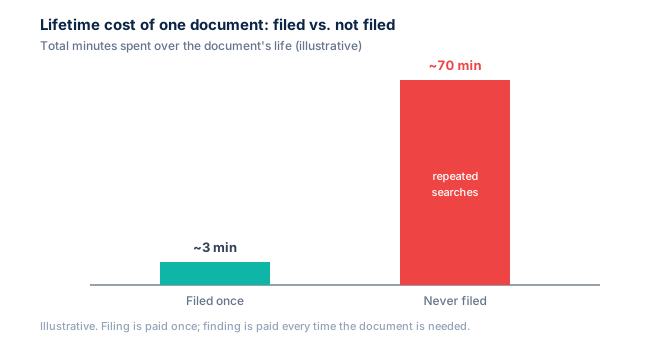
The bars below compare the lifetime cost of one document under two regimes. On the left, the document is filed properly the day it's made: one small cost, and every later retrieval is quick. On the right, the same document is never really filed - it lives in an inbox or a desktop - so it's cheap to ignore today but expensive to locate every single time someone needs it over the next two years. The left bar is almost entirely the filing minute. The right bar is almost entirely search.
Why we keep getting it backwards
If the math is this lopsided, why do capable organizations keep choosing the expensive side? Because the costs are not felt by the same person at the same time. The filing cost is concentrated and visible: it lands on you, now, as an annoying extra step. The finding cost is diffuse and deferred: it lands on someone else, later, in pieces too small to notice. Human beings are very good at avoiding a small visible pain and very bad at pricing a large invisible one. We aren't lazy; we're just paying attention to the wrong number.
The filer and the finder are usually different people, so the person who saves the time is not the person who spends it.
Search cost hides as 'just looking for something,' which never gets logged as a cost at all.
Filing feels optional in the moment; finding feels mandatory - but only once it's already too late to file cheaply.
A single late search feels trivial; the trivial searches only become a number when you finally add them up.
The takeaway is a single rule
You don't need a system to act on this chart - you need a rule, and the rule is short: pay the small cost on the cheap side. File when the document is warm, name it for the finder, and store it where the finder will look. You are not doing it for yourself today; you are doing it for the version of your team that will need this document at the worst possible moment two years from now. The cheapest minute in a document's life is the one you spend filing it. Every minute after that, the price only goes up.
The same lopsided math shows up across version control, approvals, and audits - more one-chart breakdowns of where project time really goes turn invisible costs into ones you can finally see.