How to Close a Project So It Closes for Good

There is a moment near the end of every capital project when the building is done, the ribbon is cut, the crew has moved on — and the project quietly is not closed. The lights work, but no one logged the warranty start dates. The as-builts exist somewhere, but not in one place. There's a punch list, mostly done, with a few stubborn items nobody formally signed off. Everyone treats the project as finished. It isn't. It's abandoned mid-closeout, and the bill for that comes due about a year later.
Closeout fails for a simple reason: it is treated as an afterthought instead of a deliverable. Physical completion has a hard, visible deadline — the opening, the move-in, the inspection. Closeout has none. So it slides, and the team that built the project rolls onto the next one carrying the only memory of where everything is. The fix is to make closeout a defined thing with its own checklist, captured as the work happens rather than reconstructed after. Here is what that package contains.
The closeout package, item by item
As-built drawings. The drawings that show what was actually built, not what was designed. Collected from every trade, reconciled, and stored in one place — not scattered across subcontractor inboxes.
Warranties and their start dates. Every warranty logged with its start date, duration, and what it covers. A warranty you can't find on the day something fails is a warranty you don't have.
Operation and maintenance manuals. The O&M documentation for every system and piece of equipment, so the people who run the building know how — long after the installer is gone.
Final deficiency sign-off. Every punch-list item closed, with a record of who verified the closure. "Mostly done" is not closed; it's a reopening waiting to happen.
Permits, inspections, and approvals. The full record that the project was built lawfully and signed off — occupancy permits, final inspections, regulatory approvals, all in the file.
Final accounting and lien releases. Final payment applications reconciled, holdbacks released on schedule, and lien waivers collected so no surprise claim surfaces months later.
Contact and responsibility record. Who to call for what — the trades, the suppliers, the warranty contacts — captured before the project team scatters and the phone numbers go cold.
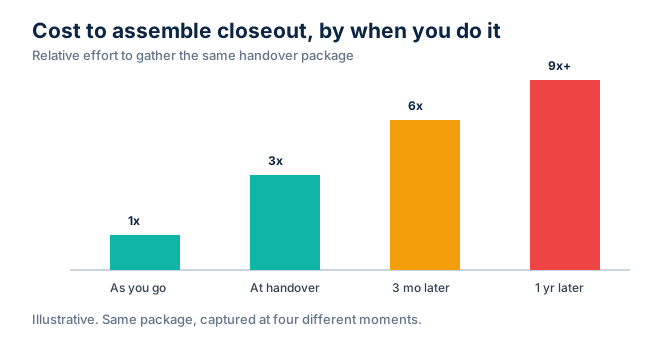
None of this is exotic. Every item on that list is something the project already produced. The failure is never that the information didn't exist; it's that it was never gathered into one handover package while the people who had it were still around. Closeout is not new work. It is collection work, and collection is far cheaper before everyone leaves than after.
Capture as you go, don't reconstruct at the end
The teams that close cleanly share one habit: they don't wait for closeout to start closing. The as-built markup happens as the change is made. The warranty is logged the day the equipment is accepted. The deficiency is signed off the day it's verified. By the time physical completion arrives, the closeout package is most of the way built, because it was assembled in real time instead of excavated from memory three months later.
Make "closed" mean something
Decide, before the project ends, what "closed" means — and make it the checklist above, not a feeling. A project is closed when the package is complete and verified, not when the crew drives away. Hold the closeout to the same standard as any other milestone: it has a definition, an owner, and a date. Do that and the year-later scramble simply stops happening, because the answer to every question lives in the package you assembled while you still could.
Try one thing on your current project this week. Open whatever you'd hand over today if it closed tomorrow, and check it against the seven items above. Whatever's missing is your real closeout list — and it's far shorter and cheaper to finish now than to reconstruct after everyone's gone.
For more bookmarkable, do-it-this-week guides like this one, browse the rest of our Field Guide series.