One Chart: How Many Approvals a Project Really Needs
Ask a project team how many separate approvals stand between groundbreaking and closeout, and the first guess is always too low. People picture the big ones — the building permit, the final inspection — and stop there. Then you actually walk a project end to end and start counting every point where someone has to formally sign off before the next thing can happen, and the number climbs into the dozens. Each one is a small gate. Each gate is a place the whole project can quietly stop.
That undercount is the problem. You can't manage what you haven't counted, and most teams have never laid out every approval their project depends on in one view. So approvals get handled one at a time, reactively, as someone notices the next one is due — and the ones that slip through the cracks aren't discovered until the work that depended on them is already blocked. The fix starts with something almost embarrassingly simple: count them.
Where the approvals actually live
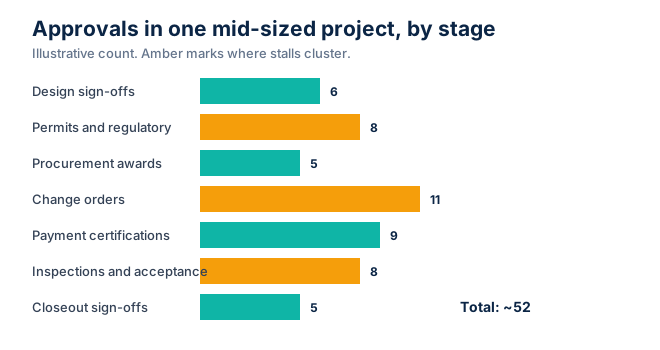
Sort a typical capital project's approvals by stage and they cluster into recognizable groups. Design and pre-construction sign-offs. Permits and regulatory approvals. Procurement and contract awards. Then the long tail that runs through construction: change-order approvals, payment certifications, inspection acceptances, submittal and shop-drawing reviews. And finally the closeout sign-offs everyone forgets until they're standing between the team and a finished project. Laid out this way, the count isn't five or ten. For a mid-sized project it's routinely thirty, forty, more.
The count isn't the point. The stalls are.
Fifty-some approvals on one project sounds alarming, but the raw number isn't the real lesson. The lesson is that each one is a potential stall, and they don't stall evenly. The pile-ups cluster in predictable places: change orders waiting on a decision-maker, permits sitting in a regulator's queue, inspections that can't be scheduled until a prerequisite sign-off clears. These are the amber bars — the stages where the most approvals live and the most days get lost. A delay here doesn't announce itself. The work just stops, and the schedule absorbs the hit before anyone names the cause.
What separates projects that flow from projects that stall isn't fewer approvals — the count is largely fixed by the nature of the work. It's whether the approvals are tracked as a system or handled as a series of surprises. A project that can see all fifty in one place, with each one's status and who it's waiting on, turns invisible stalls into visible ones. And a visible stall is a stall you can clear.
Count yours, then watch the ambers
Here's the exercise for this week. Take a live project and list every approval it needs from start to finish — every sign-off, permit, certification, and acceptance. Don't estimate; enumerate. You'll almost certainly land higher than your first guess. Then mark the ones currently waiting on someone. Those are your ambers, and that short list is where your schedule is most likely slipping right now, whether or not the schedule says so yet.
Every One Chart starts from a real failure we've seen — read the stories behind the data in our blog.