A Field Guide to Vendor and Subcontractor Records

The dispute was never really about the eighty thousand dollars. It was about a scope line everyone remembered differently — and the one document that could have settled it in an afternoon had never been filed. So instead the argument ran for three months, two lawyers, and a working relationship that never quite recovered.
Here is a pattern worth internalizing: almost every subcontractor dispute you will ever have is, at its core, a records dispute. Not a disagreement about who is right, but a disagreement about what was actually agreed, insured, changed, and signed. The general contractors who rarely lose these fights are not better arguers. They just keep a better file. This is a field guide to what belongs in it.
What belongs in every vendor file
Think of the vendor file as the complete, current answer to a single question: if this relationship went sideways tomorrow, could you prove what was agreed? Most files cannot. A good one holds every document that turns a memory into a fact.
The executed contract and scope of work — signed, dated, and the version that actually governs, not an early draft still floating around.
Current certificates of insurance, with coverage that has not quietly expired somewhere in the middle of the project.
Licenses, trade qualifications, and any required certifications — verified, not assumed because the sub seemed competent.
Every change order, in writing, tied back to the original scope. This is the single most common thing missing when a dispute begins.
Lien waivers matched to each payment, so a paid invoice cannot come back later as a claim.
The correspondence that records decisions — the email that says proceed, not just the handshake at the trailer.
The change order is where files go to die
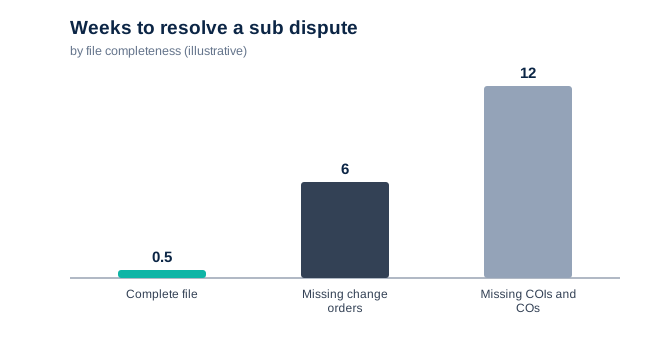
Audit a hundred subcontractor disputes and the same gap shows up again and again. Work was added. Direction was given in the field. Everyone got on with it — and nobody wrote it down. The change was real. The authorization was verbal. Three months later the sub bills for it, the owner's representative has no record of approving it, and there is no document to break the tie. The change order is not paperwork for its own sake. It is the one record that keeps a good-faith addition from turning into a bad-faith argument.
The discipline that prevents this is boring, and it works: no scope moves without a written, numbered change order tied back to the original contract, approved before the work starts, and filed the same day. It takes ten minutes. The dispute it prevents takes ten weeks.
Keep it current, not just complete
A vendor file is not a one-time setup; it decays. Insurance lapses. A license expires. A change gets agreed verbally and never filed. The file that protected you at kickoff can be worthless by month six if nobody is keeping it current. The fix is to treat the file as a living record with an owner — someone whose actual job it is to know that every active sub carries valid insurance today, not on the day they were hired eight months ago.
You do not need a lawsuit to test your vendor files. Pick your three largest active subcontractors and ask one plain question: for each, can you produce the current contract, valid insurance, and every change order right now, without a scramble? If the answer is no, you have just found the dispute you have not had yet. The best time to complete that file is today, while everyone still agrees on what happened.
A complete vendor file is the cheapest insurance on the job — and the easiest thing to skip until the day you desperately need it. More field guides on records and contracts go up every week on the XNM blog.