One Chart: The Closeout Completeness Score

A project can look finished and not be done. The ribbon is cut, the crew has moved on, the final invoice is paid — and six months later a facilities manager is still hunting for an O&M manual, a warranty, and the as-builts that never arrived. The building is complete. The closeout is not. And there is usually no single number that tells you the difference until it is far too late to fix cheaply.
So put a number on it. A closeout completeness score is nothing more than a scored checklist of everything that must exist before a project is truly handed over — and it turns we are basically done into a figure you can defend. Here is the one chart worth building for every project you close.
The score, by component
Break closeout into its real components and score each one honestly — not did we intend to do this, but can I produce it right now. The chart below is a typical project a few weeks from handover: strong exactly where the work is visible, weak exactly where it is easy to defer.
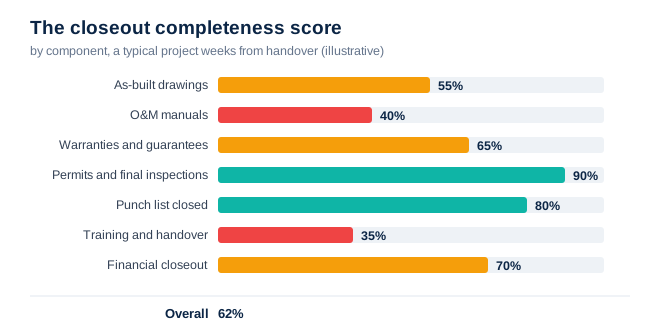
Read it and the pattern jumps out. The visible, inspected items — permits, punch list — score high, because someone is watching them. The quiet deliverables — O&M manuals, training records, as-builts — score low, because deferring them costs nothing today. But those are precisely the documents the building's operators will need first. The score exposes the mismatch between what feels done and what is done.
Score it before someone else does
The value of the score is not the number; it is the timing. Run it four weeks before handover and every gap is cheap to close: the subs are still mobilized, the knowledge is still fresh, the warranties are still easy to collect. Run it after handover — or worse, let the owner run it for you as a punch list of missing documents — and every gap now costs a phone call, a favor, or a fee. Same gaps, ten times the friction.
Keeping every one of these components in one place, scored and current, is a large part of why XNM-VISION exists — so closeout becomes a status you can read rather than a scramble you discover. But even on a whiteboard, the practice pays for itself. Score your handover honestly, early, and out loud, and you will never again mistake looks finished for is done.
A score, not a feeling
The reason this works is that it replaces a feeling with a measurement. Everyone on a project has an opinion about how close to done it is, and those opinions are almost always more optimistic than the file. A score forces the question component by component and makes the weak spots impossible to wave away. The team that scores its closeout does not just finish cleaner — it knows, weeks ahead, exactly which two or three items are going to be the problem, while there is still time to do something about them.
The projects that close clean are not luckier — they simply measured completeness before it became someone else's complaint. More on closeout and project metrics go up every week on the XNM blog.