One Chart: What an Auditor Finds First

Auditors are boringly predictable, and that is good news for you. The first three things they check are the same three, in roughly the same order, on nearly every engagement — and each one catches a different, extremely common failure. People brace for something exotic. What actually trips them up is mundane, and it is sitting in their records right now.
The reason this matters is simple: if you know the first three checks, you can run them on yourself in an afternoon and never be surprised by a finding again. Most audit anxiety is fear of the unknown. But the opening moves of an audit are not unknown at all — they are almost a script. Learn the script and the fear drains out of the process, because you already know where the auditor is going to look.
The first three, in order
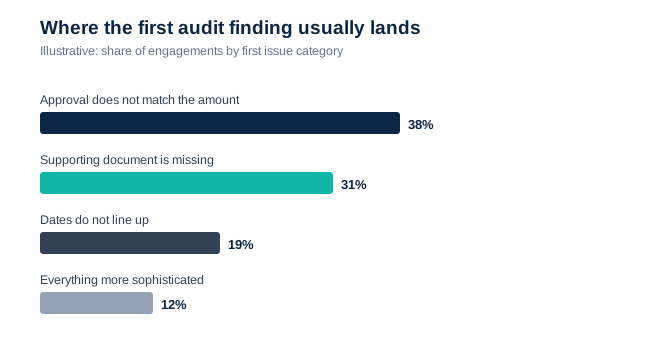
Does the approval match the amount? The auditor lines up what was approved against what was actually paid. An invoice approved for one figure and paid at another is the single fastest red flag there is — it takes seconds to spot and it questions everything around it.
Does the supporting document exist? Before anyone asks whether a number is correct, they ask whether there is anything behind it at all — the invoice, the contract, the receipt. Existence comes before correctness. A transaction with no support is a finding no matter how right the amount happens to be.
Do the dates line up? Approval before payment, delivery before invoice, everything inside the right period. A payment dated before its own approval is not a typo to the auditor; it is a thread to pull, and they will pull it.
Notice what these three have in common. None of them is about sophisticated accounting judgment. They are about whether the basic record is complete, consistent, and internally coherent. That is where problems cluster, and that is why auditors start there — it is the fastest path to the most findings.
Why this order, and what it means for you
The order is not an accident. Auditors move from existence, to consistency, to correctness — cheapest and most revealing checks first. A missing document or a mismatched approval tells them more, faster, than a deep dive into methodology ever would. So the lesson for anyone who will one day be audited is to fix in the same order the auditor checks. Make sure every transaction has its supporting document attached. Make sure the approved amount and the paid amount are the same number. Make sure the dates tell a coherent story. Do that, and you have already survived the part of the audit where most findings are born.
This is the kind of discipline XNM-VISION is built to make automatic: the supporting document and the approval attached to the transaction itself, with the dates captured as things happen, so the first three checks pass without anyone scrambling. But even with a shoebox and a spreadsheet, the three checks are yours to run. The auditor's opening moves are no secret — so make them yours first.
Pick ten recent transactions and run the three checks yourself before anyone else does. More one-chart breakdowns of how records really behave are published every week on the XNM blog.