Funded, Approved, and Still Stuck: Utilities in 2023
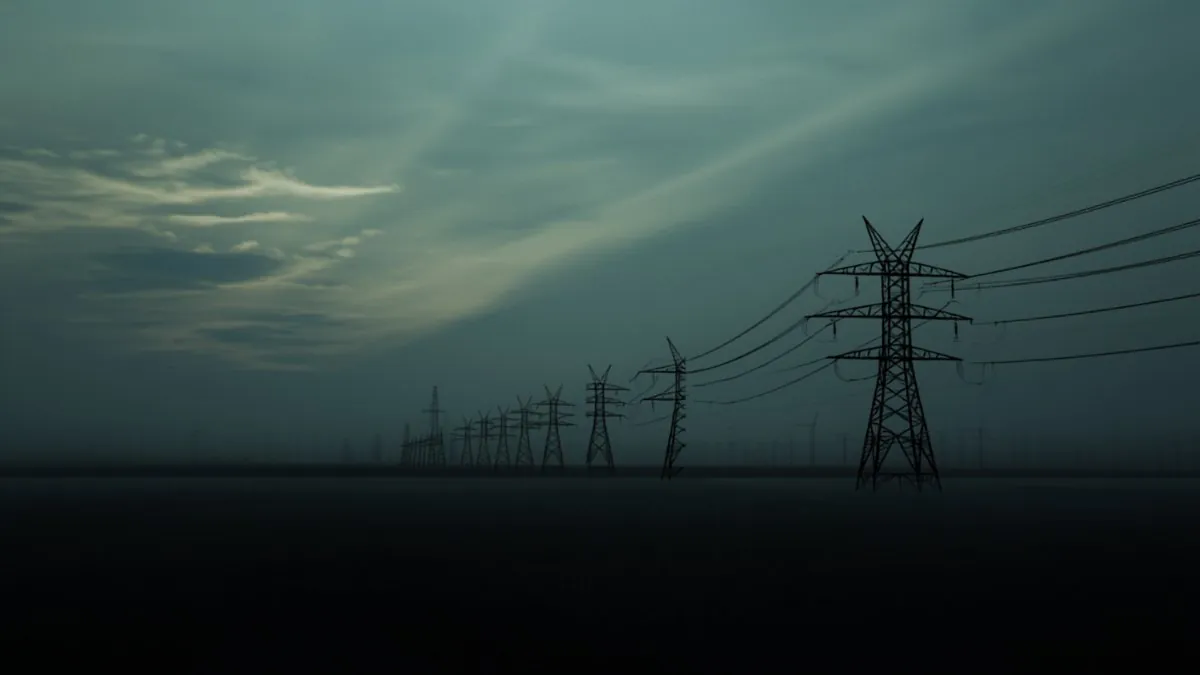
When the record 2023 wildfire season dominated the headlines in 2023, utilities felt the pressure shift. The era of arguing for funding is giving way to a harder era of accounting for it.
The stakes are simple. When you can't show a decision, you don't just lose an argument — you lose time, money, and the benefit of the doubt, usually all at once.
The records that settle questions
Utilities rarely fail for lack of effort. They fail because the proof is scattered — a sign-off here, an invoice there, a change order in a thread no one can find under pressure.
Look closer at any utilities and the same fault line appears: the people doing the work and the people who must answer for it are reading from different copies. One has the latest drawing; the other has last month's.
There is a reason this keeps happening even to careful utilities. The tools that hold the work — email, shared drives, spreadsheets, a project app or two — were each built to do one job well, not to keep a single, time-stamped record of what was decided and why. So the record becomes a manual chore bolted onto the real work, and it is the first thing to slip when regulated assets and long approval chains gets busy. In a year shaped by the record 2023 wildfire season, that one dropped chore is exactly what returns, months later, as a finding, a dispute, or a number nobody can explain.
The usual suspects, every time:
The current drawing, versus three that look almost identical
The signed copy, versus the draft everyone kept editing
The retention proof that you kept what you must keep
The single thread that explains why a number changed
What 'funded and stuck' actually looks like
For utilities, the most expensive form of stuck is rarely a missing approval. It is an approval that exists but cannot be produced at the speed the next conversation requires. A regulator asks a question on Monday and wants the answer Wednesday. The answer is somewhere — in an attachment, a signed scan, a meeting minute — but the path from question to answer winds through three inboxes, two drives, and a phone call to a colleague who is on vacation. The funding cleared months ago. The project is approved. And still, the week stalls.
This is the shape of risk that the record 2023 wildfire season has sharpened. Not catastrophic failure, but a thousand small frictions that add up to a project that runs hotter, slower, and more defensively than it should. Each individual delay looks reasonable on its own. The pattern is what costs.
The decision wasn't wrong — it was invisible
Put plainly, an audit-ready project keeps these together from day one:
The decision record. Who approved what, when, and on what basis — captured as it happened, not reconstructed under pressure.
Approvals and sign-offs. Every gate with a name and date attached, visible to everyone the decision touches.
Invoices matched to the contract. Each dollar paid, tied to the commitment that authorized it.
The contract and its change orders. The original plus every amendment, in order, with nothing living only in an email thread.
Closeout and retention. What was delivered, who signed for it, and proof you kept what you must keep.
How utilities get unstuck
Make the project's home obvious. If a new team member can't find the project in thirty seconds, neither will a regulator on a deadline.
Tie every dollar to a commitment. An invoice without a matching contract clause is the first sentence of a future dispute.
Keep one canonical drawing. Versions are fine — confusion about which one is current is not.
Capture direction at the moment it changes. Scope changes that live only in meeting memory cost more than the change itself.
Treat closeout as a daily habit, not a season. Closeout that's built up gradually finishes itself; closeout left to the end becomes its own project.
What changes the outcome isn't heroics at audit time. It's removing the gap between doing the work and recording it.
This is the problem one auditable system was designed around: one source of truth for regulated assets and long approval chains, ingesting from the inboxes and folders you already use, so nothing has to be reassembled later.
And it scales with the work, not the headcount: from a single capital project to a whole portfolio, the record stays consistent, current, and provable on demand.
Why this matters to utilities specifically: regulated work is judged not only on outcomes but on the visibility of the path to them. A perfect outcome with a thin trail is still a finding. An adequate outcome with a complete trail is a defensible decision. The teams that internalize this stop optimizing for performance alone and start optimizing for performance plus provability.
The money will keep flowing toward big builds. The teams that win the next decade won't be the ones who got funded — they'll be the ones who could prove, on any given Tuesday, exactly how the work was run.
XNM has helped public-sector and capital teams make audit-ready their normal state since 2013. See how XNM-VISION works.