Why Your Best PM Is a Single Point of Failure

Your best project manager is the one who keeps three projects from falling apart by carrying them in her head. That is not a strength. That is a single point of failure with a parking spot.
Every organization has one - the person who just knows: which approval is pending, what the client really agreed to, why that line item is what it is. We celebrate them. We should be nervous about them. By the end of this you will see why the most capable person on your team is often your biggest unmanaged risk - and why the fix makes them more valuable, not less.
Competence hides the risk
The hero PM is a victim of their own skill. Because they are good, things do not fall through the cracks - so nobody notices there are cracks. The knowledge that should live in a system lives in their memory instead: the verbal agreements, the workarounds, the context behind every decision. It works beautifully, right up until they take a two-week vacation, take another job, or get hit by the proverbial bus. Then the projects do not slow down. They stop.
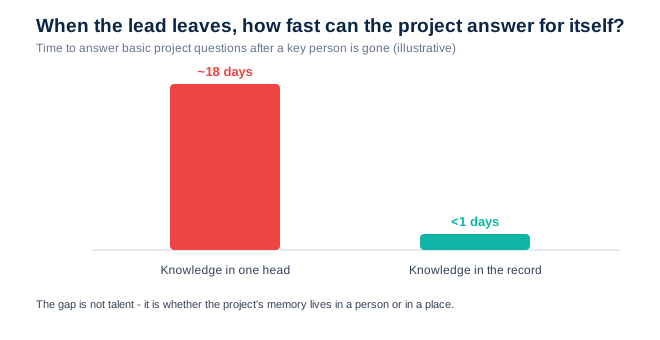
This is the bus-factor problem, and for most teams the number is one. One person whose absence would leave a project unable to answer basic questions about itself. And here is the trap: the better that person is, the more the organization leans on them, the higher the bus factor climbs, and the more catastrophic their departure becomes. You are being rewarded for building the risk.
The knowledge was never really theirs to hold
The uncomfortable reframe is that the context your best PM carries does not belong to them - it belongs to the project. The decisions, the approvals, the rationale, the record of who agreed to what: that is organizational knowledge that happens to be stored in one person's head. When it lives only there, you do not have a star employee. You have an unbacked-up hard drive that also takes vacations.
The fix makes the hero more valuable
Reducing key-person risk is not about trusting your best people less. It is about getting the knowledge out of their heads and into a place the whole team can reach - decisions logged, approvals recorded, context written down where the project lives. Do that and two things happen. The organization stops being fragile. And the hero PM gets promoted from 'the only one who knows' to 'the one who built the system that knows' - which is a far better career than being permanently un-promotable because nobody can cover your desk.
Find your bus factor - name the projects only one person could carry
Externalize the context - decisions, approvals, and rationale recorded where the project lives
Rotate deliberately - a second person who can answer for each project
Reward the documenters - make 'others can pick this up' a mark of good work, not a threat to job security
What to do tomorrow morning
Ask one question about each active project: if the lead disappeared tomorrow, could someone else answer where it stands, what has been agreed, and what is next - from the record, not from a frantic phone call? Wherever the honest answer is no, you have found a single point of failure you can still fix cheaply. The most dangerous knowledge in your organization is the kind that only walks in on Monday.
This is a big part of why we built XNM-VISION the way we did - projects and their decisions in one place the whole team can see, so a project's memory does not leave when a person does. But the principle stands on its own: the moment your best PM's knowledge is written down, they stop being your biggest risk and become your biggest multiplier.
A hero who carries the project in their head is the same fragility as a budget only one team reconciles or a drawing only one person can read - knowledge with no backup. We keep pulling that threadacross the field notes on the blog. Move the memory out of the person and into the record, and your best people finally get to be leverage instead of liability.