Why the 2025 federal budget's capital agenda Puts Forestry operators on the Clock
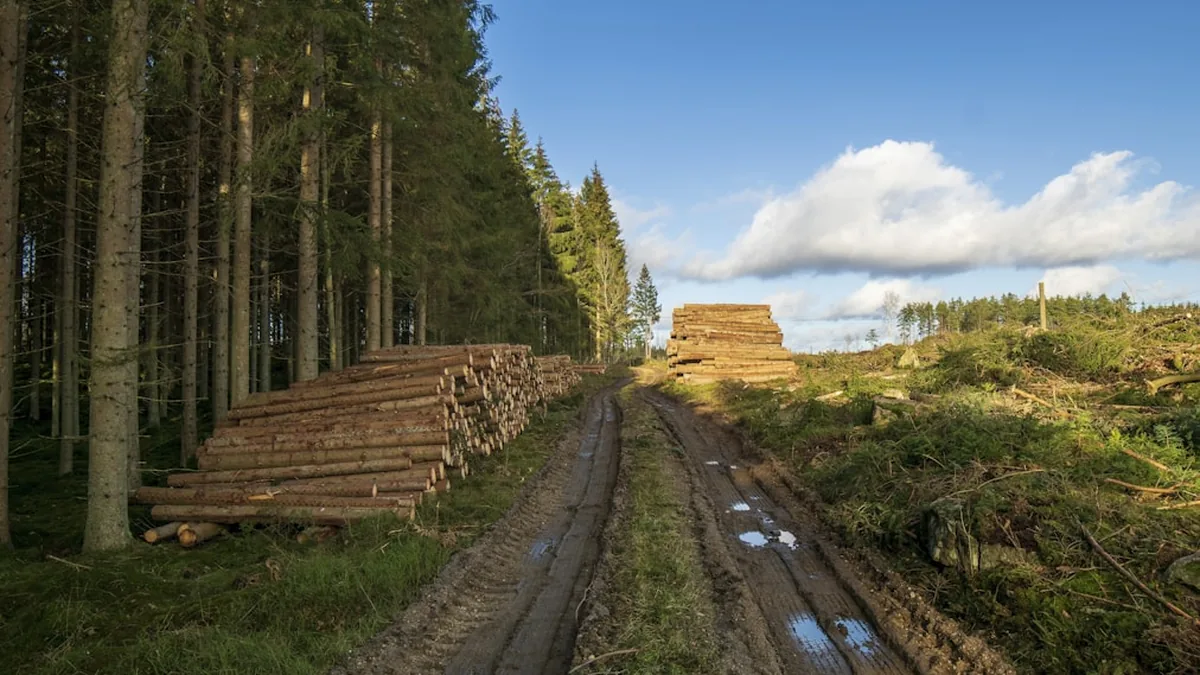
Every forestry operators we talk to has the same 2025 story. The 2025 federal budget's capital agenda raised the stakes, the project got bigger, and the paperwork that proves it got harder to keep straight.
Why the paperwork lags the work
The teams that move fastest are not the ones with the largest tools. They are the ones who decided, early, that every meaningful action lands in one place with a name and a date attached. Everything else is downstream of that one habit.
There is a quieter cost too. When the record is shaky, people hedge. Approvals get vaguer. Sign-offs get conditional. Risk slides sideways instead of being decided. The program slows, not because anyone is blocking it, but because no one wants to be the one whose name is attached to a decision the record will not back up later.
A scope change that was approved verbally and never written down
A vendor selection where the runner-up's quote cannot be found
A milestone payment released against an invoice no one re-checked
A community commitment that lives only in someone's notebook
What's really at risk isn't tidiness. It's whether a funder, an auditor, or a partner can look at your project and trust that it was run the way you say it was.
Funded is not the same as finished
Most forestry operators are managing tenure, stewardship records, and field compliance across email, spreadsheets, and three or four tools that don't talk to each other. The information exists. It just can't be assembled when it counts.
It compounds over time. Every handoff between forestry operators and their partners is a chance for a version to fork, an approval to go unrecorded, or a commitment to survive only in someone's memory.
Step back and the pattern is almost mechanical. Money arrives, ambition rises, the project grows — and the volume of decisions grows with it, faster than any inbox or folder can keep straight. For forestry operators, the failure is rarely dramatic; it is a slow accumulation of small, unrecorded moments that only add up to a problem when someone with authority starts asking questions. The 2025 federal budget's capital agenda is making that someone show up sooner, and more often. The teams that feel calm about it are not working harder — they simply never let the record and the work drift apart in the first place.
When a project gets questioned, these are the items everyone scrambles for:
An approval sitting in one person's inbox, with no backup and no clock anyone else can see
A contract on a personal drive that the field crew never opens
A change order buried in an email thread
A verbal 'go ahead' that left no trace
The decision wasn't wrong — it was invisible
If you keep nothing else in a single system, keep these:
Invoices matched to the contract. Each dollar paid, tied to the commitment that authorized it.
Version history. Proof of which drawing, spec, or policy was current on any given day.
Closeout and retention. What was delivered, who signed for it, and proof you kept what you must keep.
Procurement justification. Why this vendor, this price, this process — documented at the time, not rationalized after.
Approvals and sign-offs. Every gate with a name and date attached, visible to everyone the decision touches.
You don't solve this with another reminder or another folder. You solve it by making the record a by-product of doing the work, not a second job.
This is the problem one auditable system was designed around: one source of truth for tenure, stewardship records, and field compliance, ingesting from the inboxes and folders you already use, so nothing has to be reassembled later.
Crucially, one auditable system doesn't ask forestry operators to change how they work. It sits on top of the sources you already have, turning scattered effort into one auditable trail without a migration project.
The lesson repeats across every sector. You don't survive scrutiny by preparing for it. You survive by never being in a position that needs preparing.
In practice
Programs rarely fail in one big moment. They drift, one undocumented decision at a time, until the day someone asks for proof and the answer takes a week to assemble. The teams that hold up under that question are not the ones with more meetings — they are the ones whose records caught up with the work as it happened.
The original budget, with every revision time-stamped
The contract, with every amendment attached to the same record
The approvals, with the actual signer and the date
The closeout, with what was delivered and who confirmed it
The cost of a slow answer
In practice, the difference shows up in how fast a coordinator can answer a single question: 'who approved this, on what basis, and when?' If the answer requires three inboxes and a phone call, the program is already paying for it; the only question is when the bill arrives.
Consider a familiar scenario. A capital project shifts scope mid-quarter because the geotechnical report changed. The change is correct, the engineer signs off, the contractor adjusts. Nine months later, an auditor asks why the budget moved. The decision was right. The record of it is gone. The finding goes in anyway.
Practical steps that actually stick
Name the record before you need it. Decide today which artifact answers each likely question, and where it lives.
Log decisions as they happen. A two-line note at the moment of approval beats a one-page reconstruction three months later.
Attach the dollar to the decision. Every budget move should sit next to the document that justified it.
Close the loop in writing. A verbal 'go ahead' is fine — followed within a day by a written confirmation that lives in the file.
Why this matters
We do not need more dashboards. We need fewer places where a record can hide. A single timeline — decision, approval, document, dollar — is worth more than ten reports built on top of scattered sources.
Capital projects do not get easier as they get larger. The volume of decisions, sign-offs, and small commitments multiplies, and so does the surface area where a record can go missing. The programs that come out clean are the ones that treated the record as part of the work, not a chore bolted on at the end.
How XNM-VISION helps
XNM-VISION exists for exactly this gap. It keeps the decision, the document, the approval, and the dollar on one timeline per project, with the audit trail attached by default. When the question arrives — from a funder, an auditor, a community partner, or a board — the answer is one search away, not one week away.
If your last review felt like a fire drill, that's a records problem, not a character flaw — and a solvable one. See how teams make ready their resting state with XNM-VISION.