The Case for Boring, Findable, Complete

Nobody wins an award for a well-named folder. There's no keynote about the invoice that was exactly where it should be. And yet the organizations that quietly outperform their peers, year after year, tend to share an unglamorous trait: their records are boring, findable, and complete. That's not a consolation prize. It's a competitive advantage hiding in plain sight.
We're trained to admire the dramatic — the heroic recovery, the all-nighter that saved the deal. But most of those heroics exist to paper over a records failure that should never have happened. The boring alternative doesn't generate war stories. It generates results.
Boring is a feature, not a bug
Exciting records are a bad sign. If finding a contract is an adventure, if closing the month is a scramble, if every audit is a fire drill, your records are exciting — and that excitement is pure cost. Boring records are the goal: predictable, unremarkable, always where you left them. Boring means the system is doing its job so you can do yours.
Findable beats comprehensive
Plenty of organizations keep everything and can find nothing. A complete archive you can't search is just an expensive warehouse. Findability is the multiplier: a smaller, well-indexed set of records that anyone can retrieve in seconds beats a vast, perfect collection buried in folders only one person understands.
Boring means no surprises — the record is where the convention says it is.
Findable means anyone, not just the author, can retrieve it under pressure.
Complete means the story holds together — no missing sign-off, no gap where the key decision should be.
Miss any one of the three and the other two lose most of their value. Complete but not findable is a warehouse. Findable but not complete is a trap. Boring but incomplete is a comfortable illusion.
What the advantage looks like in practice
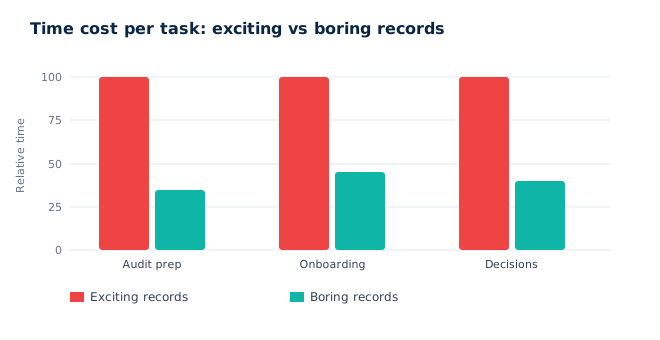
The advantage compounds. The boring-records organization onboards faster because knowledge is written down, not tribal. It moves faster on decisions because the evidence is at hand. It sails through audits because 'audit-ready' is just its resting state. None of it makes headlines. All of it wins.
Why this is really a leadership choice
Boring, findable, complete records don't happen by accident, and they're not the filing clerk's problem to solve alone. They're a standard set from the top: the decision that 'good enough to find later' is the baseline, not a nice-to-have. Teams do what leaders measure, and almost no one measures findability — which is exactly why it's such a durable edge for the few who do.
The takeaway
Stop admiring the heroics and start removing the need for them. Aim for records so boring that no one ever tells a story about them — because nothing ever went wrong. That quiet, unremarkable reliability is what lets a small team act like a big one and a big one move like a fast one. Making 'boring, findable, complete' the effortless default is precisely what XNM-VISION is built to do.
Boring records are the least glamorous competitive advantage there is — and one of the most durable. For more on turning records from a chore into an edge, keep reading on the XNM blog.